One Third of Drivers
Stopped Were Found
Drinking and Driving
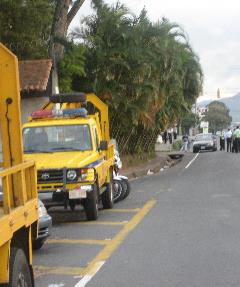
A number of drivers will
be walking during the
holiday season, having
had their vehicle
confiscated by the
Policía de Tránsito,
mainly for drinking and
driving. And they will
not be able to get them
back until the new year
when they will be able
to pay the fine.
So far this month,
Tránsito officials
confiscated 293 vehicles
of drivers behind the
wheel while under the
influence, 29 of which
were confiscated between
12 midnight Friday and
4:00am Saturday, forced
to take a taxi, have a
friend pick them up or
walk home.
Tránsito officials have
had to put with insults,
profanities and the
endless declarations of
not being drunk or
failed attempts to flee
the law.
The Ley de Tránsito
(traffic laws) allow the
Tránsito official to
confiscate the vehicle
and impound it if the
driver cannot provide
another driver not under
the influence to move
the vehicle, in which
case it is taken to the
nearer Tránsito impound
lot where it will wait
for the owner, if not
the driver, of the
vehicle to claim it.
The driver who is above
the 0.99 limit will be
issued a ¢20.000 colones
fine and lose their
licence in addition to
the vehicle. For drivers
who test between 0.49
and 0.99, the fine is
¢10.000 colones, but
will not lose their
license nor the vehilce,
though they will not be
allowed to drive home.
During the month of
December, Tránsito
statistics show that of
the 960 alcoholemias
(breathalyzer tests),
293 of the drivers were
1.00 and above, and 350
were between .050 and
.099.
Only 317 or one third of
the drivers tested were
sober.
The Policía de Tránsito,
headed by Germán Marín,
vowed to get tough with
drunk drivers during
this holiday season and
in a show of full force,
they are doing so with
spot checks on a 24
hours rotating basis.
Spot checks were
typically held only at
night and near locations
of bars and people
partying. However, this
year, the spot checks
can be anywhere and at
any time of the day or
night.
"Drivers should expect a
hard line, the only way
to avoid more
tragedies", were the
words of Marín, who
added that the
additional inconvenience
of having to go without
a vehicle until the new
year may send the
Tránsito message home. |
|