|
Vesco
Money Paid Tico Aguinaldo
A report in today's edition of
Telenoticias - local channel 7
news - that money invested in
Costa Rica by Robert Vesco, who
was converted from financial
genius to one of the country's
biggest controversy, went to pay
Costa Rican "aguinaldos" or the
annual Christmas bonus.
The report says that the
fugitive from United States
justice became the "petty cash"
box for the state, responsible
for paying the aguinaldo to
public employees.
Robert Lee Vesco (born December
4, 1935) is a US financier who
fled U.S. Securities and
Exchange Commission (SEC) and
ended up in Cuba.
Robert Vesco took over a small
New Jersey industrial company
called International Controls
Corporation and grew it rapidly
through hostile, debt-financed
takeovers of other businesses.
By 1968 the company owned an
airline and several
manufacturing plants and Vesco
held shares totalling us$50
million. Although outwardly a
family man, he spent most of his
time in gambling.
In 1970 Vesco emerged as a
possible savior of the failing
Swiss investment firm Investors
Overseas Services (IOS), a firm
that invested funds for overseas
Americans (and Americans looking
to avoid U.S. scrutiny or taxes)
in a variety of mutual funds.
The founder of IOS, a man named
Bernie Cornfeld, had run into
trouble with the SEC and when
his firm ran into financial
difficulty, no large, reputable
'white knight' was willing to
get involved.
Vesco saw his chance, and
entered in a protracted battle
to assume control of the
company, opposed by Cornfeld and
others. The battle quickly got
nasty; Cornfeld was thrown in
jail in Switzerland and Vesco
was accused of looting the
company of hundreds of millions
of dollars. Many prominent
figures in global business,
finance, and royalty were tied
to the mess, receiving money
from one party or the other for
support. Among the accusations
against Vesco were that he
parked funds belonging to IOS's
investors in a series of dummy
corporations, one of which had
an Amsterdam address that was
later linked to Prince Bernhard
of the Netherlands, and that he
broke into a Swiss bank vault to
obtain shares. These charges
will likely never be proven, as
Vesco went on the lam, fleeing
to Latin America and spending
the next fifteen years hopping
between countries that lacked
extradition treaties with the
United States.
In hopes of shutting off the SEC
investigation into his
activities, Vesco routed illegal
contributions to Richard Nixon
through his nephew, Donald
Nixon. The story was soon
revealed and Vesco was in bigger
trouble than before. Among the
charges that emerged in the
years after Watergate, the SEC
accused him of embezzling us$220
million from 4 different IOS
funds and he was accused of
cocaine trafficking. Vesco fled
to Costa Rica.
In Costa Rica, Vesco donated
us$2.1 million to company of
president Jose Figueres Ferrer.
Figueres even passed a law to
guarantee that Vesco would not
be extradited. Vesco still hired
a number of bodyguards.
In 1974 Figueres constitutional
term ended. Vesco managed to
stay in Costa Rica up until
1978, when President Rodrigo
Carazo (1978-1982) repealed the
"Vesco Law".
Vesco moved first to Nassau and
then to Antigua. Costa Rican
government blocked his attempt
to return. For a while, he lived
in Nicaragua, while the
Sandinista Government was in
power. Each of these countries
accepted him in the hopes that
his great wealth would finance
local development projects (or
significant bribes to those in
charge).
However, this worked poorly for
everybody involved. Though Vesco
was reputed to have stolen over
us$200,000,000, and appeared
several times in Forbes
Magazine's list of the
wealthiest people in the world
(job title: "Felon"), it seems
likely in hindsight that the
amount he stole was much, much
smaller.
By 1980, he was probably broke
and attempting drug running and
other ventures to keep himself
afloat. In 1982 he moved to
Cuba, a country that could
provide him with treatment for
his painful urinary tract
infections, and which would not
extradite him to the U.S. Cuban
authorities accepted him in
condition that he would not get
involved in any financial deals.
He also married Lidia Alfonsa
Llauger.
Vesco was apparently not able to
resist future financial schemes,
and was soon involved in a plan
to trade in a supposed
anti-cancer and AIDS drug called
TX. Bizarrely, his partner in
this enterprise was Donald
Nixon, nephew of U.S. President
Richard Nixon.
On May 31, 1995 Cuban
authorities arrested Vesco, his
wife and Nixon, whom they held
for 30 days before sending him
back to America. Vesco was not
so lucky; in 1996 the Cuban
government sentenced him to
thirteen years in jail.
|
|
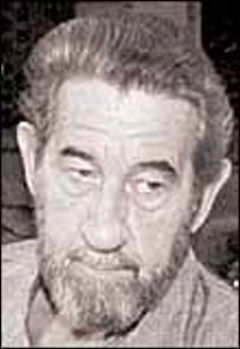
Roberto Vesco...
The undisputed king of the
fugitive financiers. Vesco fled
to Costa Rica in 1973 in order
to avoid standing trial for the
alleged theft of us$224 million
from the Swiss-based mutual
fund. Vesco was indicted
in absentia. He was indicted yet
again in 1989 on drug smuggling
charges.
From Costa Rica, Vesco
hopscotched to the Bahamas,
Antigua (where he tried
unsuccessfully to buy a nearby
island called Barbuda and
establish it as a sovereign
state), Nicaragua and, finally,
Cuba, where he has lived for the
past two decades and, since
1995, been domiciled in a Cuban
jail.
Vesco started several joint
ventures with the Castro regime,
but was later sent to jail by
Castro when he tried to become
more independent and cut
him out of the deals.
He gets out in 2009, when he'll
be 74. Vesco's Cuban wife Lidia
was convicted on lesser charges
and gets out in 2005. |
|
|
|
|
|


