|
The ATM Took Ate Up My Card!
Using an Automated Teller
Machine (ATM) or completing an
electronic transaction can still
be risky business in Costa Rica.
The increase in the use of
automated tellers and electronic
payments has given rise to the
number of incidents where a bank
card is retained by an ATM
machine, cash not dispensed and
the electronic payment not
reaching the intended service.
Part of the problem, the banks
explain, is the customer who is
not familiar with the use of the
ATM or the electronic
transaction process. Another
problem is that there are
differences in the types of
ATM's operated by the different
banks and the electronic
platforms they use.
ATH, the largest of the private
ATM network operates somewhat
different than the system used
by the Banco Costa Rica or the
Banco Nacional, for example.
This confusion can come easily
as the customer, especially
foreigners, believe all ATM's to
be on one network and similar to
those in use in North America.
The fees associated with each
transaction is also different at
each institution. Private banks
who members of the ATH network
usually charge a small
transaction fee, if any, while
the state banks and BAC San José
charge up to us$3 per
transaction.
Another problem experienced by
foreigners is knowing which ATM
dispenses dollars and colones.
Scotiabank has done a successful
job at identifying their ATM's
that dispense both currencies.
Most ATM's offer services in
English.
The electronic payment platform
used by both private and state
banks also can leave a user
bewildered. The Banco de Costa
Rica system is seamless,
completing payments to utilities
- telephone, electrical power,
water - and transfer between
accounts easy, while that of
private banks are more
cumbersome when it comes to
paying say your telephone bill.
The Área de Apoyo al Consumidor
de la Comisión Nacional del
Consumidor says that 25% of the
complaints they receive are
related to banking transactions.
To date, the government agency
has received some 6.000
complaints.
The agency says that in most of
the cases, the bank and the
customer come to an agreement.
But, currently there are 25
charges against financial
institutions that under close
investigation.
So, what happens if the ATM
takes your card and/or doesn't
dispense the cash requested.
The first step, is to contact
the bank responsible for the
ATM. If the ATM is in a mall or
other location, independent of a
bank branch, jot down the number
on the machine and the bank
responsible and call it
immediately. Make a note of the
time of the transaction and a
full explanation of what
happened.
According to sources at the ATH
network, they say that they can,
in most cases, resolve the
problem immediately, but the
customer has to be patient. In
the case of an "eaten up" card,
the can retrieve it usually
within 24-48 hours hours. In the
case of no cash dispensed, this
will take more time, as an
internal audit has to be
completed.
If the bank does not resolve the
problem then you should
contact the office of the
Defensoría del Consumidor
(Ombudsman) by calling 800 266
7866 or send a fax to 284 8821
or make a personal visit to
their office which is located
200 metres north of the Pizza
Hut on Paseo Colón.
Banking superintendent, Óscar
Rodríguez, says that the
Superintendencia de Entidades
Financieras (SUGEF) does
not handle bank-customer
complaints, rather it deals with
ensuring that the banking system
is sound and that the registered
banks are following government
policies.
|
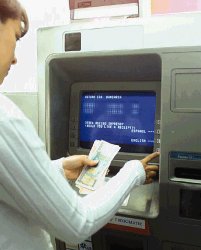
Problems with an ATM machine
should be reported immediately
to the bank or contactl the
Defensoría del Consumidor
(ombudsman) by calling 800 266
7866 |
|
|
|
|
|
|


