Saturday 06 December
2008, San José, Costa
Rica
 Avenida Central
Boulevard Extension Complete
Avenida Central
Boulevard Extension Complete
Drunk Drivers and
Speedsters Can Do Community Work To
Avoid Jail
Hotels Ready On New
Online Reservations
System
Gas Price Drop Approved
10,000 Hectares of Bad
Bananas
Dollar Appreciates Again
|
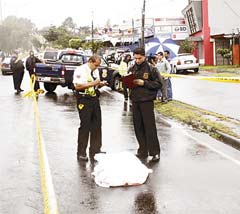
Drunk Drivers and
Speedsters Can Do
Community Work To Avoid
Jail
Besides the increased
fines that has many
drivers worried, the
reforms to the Ley de
Tránsito will mean jail
time for drunk and
reckless drivers. The
new traffic law is
expected to pass second
debate on Monday and
will be in force in
about nine months.
One major change that is
aimed directly at
drivers under the
influence of alcohol and
drugs is the lowered
limits of blood alcohol
content and the harsh
penalties.
Currently, the traffic
law says that a driver
with 0.50 and 0.99 blood
alcohol content is in
"pre-ebriedad" and
anything over is in "ebriedad"
(drunk) and subject to a
fine, retention of a
driver's license and
confiscation of the
vehicle, even in the
event of a serious or
fatal accident.
The new rules change all
that. There is no "pre-ebriedad".
Two types of punishments
are called for in the
case of drunk drivers,
"administrative" where
the blood alcohol
content is between 0.50
and 0.75 and "penal"
when the results are
over 0.75.
According to judge Franz
Corte of the Comisión de
Ley de Tránsito drivers
under the influence of
alcohol or drugs and/or
are driving in excess of
150 km/h, take part in
"piques" (street
racing), cause serious
bodily arm and/or death,
will go straight to
prison for 3 to 15 years
and will have their
license revoked for up
to 30 years.
Corte was clear that the
new traffic law will be
harsh on drunk and
reckless drivers,
explaining that an
irrisponsible driver who
causes serious bodily
injury will be seeing
the inside of a prison
cell for one to three
years and not be
permitted to drive for
15 years.
Corte added that drivers
with a clean record and
are caught with a blood
alcohol content of less
than 0.50 or excessive
speeding could do
community service work
to avoid jail time,
in addition to paying
the fine.
The community work will
take place in IAFA (Instituto
Sobre Alcoholismo y
Farmacodependencia) -
alcohol and drug
institute, the morgue,
and the Centro Nacional
de Rehabilitación, among
other institutions.
|
|
|
|
|
|
|
|