|
"Stop Fighting
Among Yourselves and Start Competing With
Others", Expert Tells Costa Rica
"Costa Rica could be one of the first world
countries in 10 to 15 years", according to
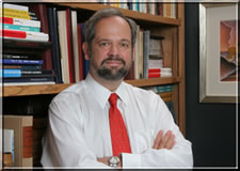
analyst Juan Enríquez Cabot, who gave a talk on
Monday at the Auditorio Nacional, of which Costa
Rican president, Oscar Arias, was present.
In a report by the Spanish language daily, La
Nación, Cabot is quoted as saying that Costa
Rica needs to close the technology gap, base its
economy on education and technological know how;
open its borders and duplicate and triplicate
its efforts to attract more "Intels" and "Inbios"
to the country.
"Stop arguing with each other and start
competing with others", was Cabot's advice.
Juan Enriquez, is a bestselling author,
businessman, and academic, is recognized as one
of the world's leading authorities on the
economic and political impacts of life sciences.
In Monday's talk, which was the second in the
country, the first given in 2005, Cabot talked
about the fragility of countries, the
comparative advantage of small countries who is
educated.
Cabot has published several key articles
including, "Transforming Life, Transforming
Business: the Life Science Revolution,"
co-authored with Ray Goldberg, which received a
McKinsey Prize in 2000 (2nd place). He
co-authored the first map of global nucleotide
data flow as well as HBS working papers on "Life
Sciences in Arabic Speaking Countries", "Global
Life Science Data Flows and the IT industry", "SARS,
Smallpox, and Business Unusual," and
"Technology, Gene Research and National
Competitiveness." Harvard Business School
Interactive picked Juan as one of the best
teachers at HBS and showcased his work in its
first set of faculty products.
The talk was organized by Roberto Artvia of the
Instituto Centroamericano de Administración de
Empresas (Incae) and Roberto Sasso, president of
the Club de Investigación Tecnológica.
cabot feels that Costa Rica is on the wrong side
of the digital gap, which is growing bigger.
"Imagine a country without a democracy, were the
control of all - schools, radio, newspaper,
employment - is not the by the government", said
Cabot, referring to East Germany that
disappeared in only nine days.
Cabot added that the fragility of a country is
not exclusive to communist or poor countries.
Nations and empires have disappeared "when there
is dissonance between what is said what happens,
what is promised and what is given", said Cabot,
who added that no one is immune to that.
National hymns, flags and borders are all
artificial things, myths and identities that are
generated to keep a country are not enough to
maintain its life.
What is the solution? According to Cabot, it is
by opening borders and new markets, understand
ones own language and culture and adopt those of
others, in addition to learn to move quickly
with a population educated in science and
technology.
Cabot assured that Costa Rica, between 1970 and
1990, followed a development model similar to
that of Asian tigers - Hong Kong, Singapore,
Taiwan and south Korea.
Those countries, with investment in education
and technology, went in less than three decades
from a underdevelopment to developed. They
taught their people the "digital" language.
Cabot said that Costa Rica was going the same
way, investing in education, creating the
Fundación Omar Dengo, and the Instituto Nacional
de Biodiversidad (INBio). "Some ten years ago,
Costa Rica promised to be the first developed
country in Latin America", Cabot said.
However, it fell behind. it fell into a "eight
sabbatical... and sabbaticals are very costly",
declared Cabot.
"I believe that if Costa Rica had not taken the
sabbatical, it was on the way to being developed
along side Chile and Panama", said Cabot.
Although the country fell asleep for the eight
years, Cabot feels that all is not lost. In a
decade, Costa Rica could join the developed
world, and for that it has to step on the
accelerator.,
"You are moving ahead, now speed up", emphasized
Cabot. "You won't do it duplicating the wealth
of the farmers, you will do it duplicating the
investment in biotechnology and computer
engineering", added Cabot.
Cabot added that the development can be done "a
la tica", respecting its decision for
sustainable development while protecting the
ecology.
On the subject of the Tratado de Libre Comercio
- free trade agreement with the United States -
Cabot said that this is a Costa Rican decision
and that no one, not the United States or
Venezuela, for instance, can tell you what to
do. "It is a decision that you alone have to
take, however with serious debate and no
insults", said Cabot.
|
|