|
Pirated
Movies Is Big Business in Costa Rica
Movies
like Shrek the Third that just opened in San
José theatres Friday and like others recent
releases are all available on the streets of San
José in their "pirated" version, at a fraction
of the cost of the original DVD and less than
the cost of admittance to the theatre.
The illegal copying and selling of first run
movies is out of control, officials say, who are
also concerned that children are learning from
their parents that buying pirated material is ok
and normal.
The reason for the illegal copying is possibly
that many do not want to wait for the movie to
hit the theatres or wait for the importation of
the original, which can be weeks to months
behind their release in the United States.
In rare occasions, like the third installment of
the Pirates of the Caribbean, the film was
released on the same day as the U.S. release and
the DVD's were in the stores.
Shrek the Third was released in the U.S. on May
18, but just yesterday did it make it onto the
big screen in Costa Rica.
Illegal copies of the Shrek the Third DVD have
been available for weeks and at a cost of
between ¢1.000 and ¢2.000 colones (us$1.94 and
us$3.88), depending on the location and the
quality of the copy.
The cost of admittance to the Cinemark in Escazú,
for instance, is ¢1.700 colones (us$ 3.29) for
children, students, seniors and all matineés and
¢2.100 (us$4.07) for adults.
The cost of buying the original DVD online is
us$39.99 at Amazon.com, plus the cost of
shipping, sales tax and duty in Costa Rica.
Shrek the Third, like Pirates of the Caribbean 3
and other recent releases are all available on
the streets of San José in an illegal form and
though police have raided a number of retailers
copying and selling the pirated DVDs, their
actions are small compared to the size of the
illegal market.
"The subject is a problem of price, the
difference is substantial, and that is why we
have a publicity campaign appealing to the
conscience that buying pirated material is
robbery", said Randall Salazar, of the
Ministerio de Justicia (Ministry of Justice).
"Many now have home theatres, who want quality,
however, end up buying pirated material, without
their knowledge", said Salazar, who feels that
stronger legislation is needed to combat the
growing problem.
In general copied versions do not have the same
picture and sound quality of the original, and
do not contain the extras included in the
original version, like language and subtitle
choices, director's cut, commentary, etc. And in
some cases, the quality of the copy and the disc
used is so poor that it won't work and damages
DVD players.
The problem has reached at such a level that in
Mall San Pedro, for instance, while the movie
Shrek the Third is playing in the mall's
theatres, pirated copies can be purchased at
retails stores in the mall.
"The Ministerio de Hacienda (Revenue Ministry)
has measures to control the borders to
confiscate imported products, however, the
majority of the pirated material is produced
nationally", said Salazar.
Costa Rica is one of the leaders in Latin
America for pirated material, according to a
report by the Alianza Internacional de Propiedad
Intelectual.
The International Intellectual Property
Alliance (IIPA) places Costa Rica in 3rd place
on its "watch list" for the Americas, behind
countries like Mexico, Canada and Colombia, for
total losses in 2006 due to piracy. Countries
like Argentina, Chile and Venezuela are on the
"priority watch list".
The pirated material in the losses include
business software, records and music, motion
pictures, entertainment software and books.
The IIIPA is a private sector coalition formed
in 1984 to represent the U.S. copyright-based
industries in bilateral and multilateral efforts
to improve international protection of
copyrighted materials.
|
|
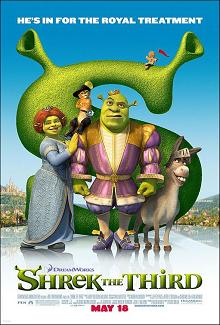
A pirated copy of Shrek the Third
and other recent releases costs less
than the price of admission to the movie
theatre. |
|
|
|
|
|


