


Rep. Nidia Jimenez discusses the challenges faced by tourism business leaders
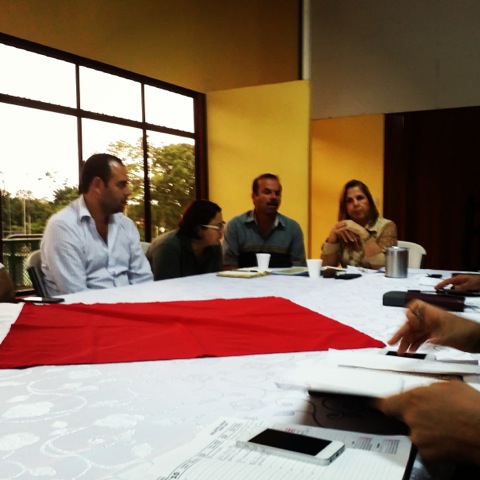
(Photo credit: Christine Larson-Krishnan)
“The best thing to do is to go straight to the source of the problem,” said Jimenez. ”Put together a committee and give me the main points of your situation and I’ll get you a meeting with the Minister of Hacienda next week,” said Jimenez.
The tourism professionals explained that the tax law interpretation was not meant for tour operators, but rather is a tax intended for “Recreation Centers” and that there exists differing views among the other tax zones in Costa Rica as to what should and should not be exempt from the 13% tax.
“San Carlos and the Osa Peninsula are the only tax zones that interpret the law in this way,” said Pedro Rodriguez, an accountant who represents several tour outfitters in the area.
“It is unthinkable to interpret the law this way and require Tour Operators to pay this tax. Worse yet, it will bankrupt the tourism industry if companies have to pay five years of back taxes on a tax they never knew existed in the first place,” Rodriguez said. “The PAC (political party) has put forth a plan to implement the tax in two years – this sounds like a more-reasonable approach.”
Apart from discussions about the sales tax, the Congresswoman heard concerns about the changes at the hydroelectric dams that control water release levels on the Balsa River that are causing problems for the rafting industry.
“For years we have worked together very well with the hydroelectric dams on local rivers to understand their schedules for water release and there has always been a consistent flow to go rafting. Costa Rica is famous for its rafting and the Balsa River is one of the principal attractions for the Northern Zone,” said Danny Araya of Desafío Adventure Company.
“There are many companies and families who depend on the Balsa River for the thousands of tourists who go rafting there each year – all we are asking is for transparency and better communication so we can make the proper plans with our tourists,” said Araya.
Members of the rafting industry complained that after almost 15 years of running daily rafting trips on the Balsa River, the electrical dam no longer releases the amount of water necessary for rafting at the originally-scheduled times for water release and there are conflicting reports of broken equipment at the dam that prevents the dam to release more water, among other concerns.
“We need to understand more about the electrical grid and electricity requirements to see how we can improve communication and work together with the tourism industry in this case,” said Jimenez and promised to organize meetings with higher-ups in ICE (Instituto Costarricense de Electricidad) to review the situation.
The group brought to the Congresswoman’s attention the problems with the delay in approving permits for tourism vehicles due to the lack of assigning a national commission to oversee the granting of permissions in the country’s transportation departments (MOPT and CONAVI.) Tourism transport providers lamented that several tourism vans have had their license plates removed even though they have been provided provisional permits, but that local traffic officials refuse to accept them as legitimate permissions.
Congresswoman Jimenez updated the group on her concerns of what she explained was a “disgraceful lack of progress on the new highway through San Carlos” and reported that she is working on making the engineers of the project more-accountable for their work.

Editor’s note: Our Community Reports do not undergo our normal editorial process and are provided by volunteer Community Reporters. If you notice an error, or believe the report contains something inaccurate, please send an email to [email protected]. If you are interested in becoming a volunteer Community Reporter for your area, please write [email protected].
Editorial guidelines for community reporters

ATTENTION: If you are seeing this message,

