|
Venezuela: Reasons for a Historic Move
Several violations and sanctions, as well as
constitutional and legal factors, underpin the
decision of the Venezuelan government of not
granting today the concession for private Radio
Caracas Television (RCTV) channel to use
radioelectric space.
For 53 years, RCTV enjoyed the exploitation of
channel 2 of the country's air transmission
spectrum, a concession expiring today, without
any chance of renewal, according to authorities.
The official determination was even further as
to hand over the frequency to a new public
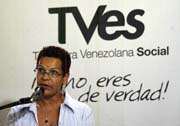
service station, Venezuela's Social Television (Televisora
Venezolana Social, TEVES).
This will enhance plurality, with a message
aimed at the citizen, and not the consumer,
according to Communication Minister Jesse
Chacon.
According to reports from the Ministry of
Telecommunications, in the last 30 years RCTV
was subject to several proceedings for unfair
practices (2003, 2004, 2005) and infractions.
They include sanctions of temporal broadcast
closure, applied under previous governments
(1976, 1980, 1981, 1984, 1989 and 1991).
But the darkest page of its record was written
in April 2002, when RCTV management cut its
daily programs to support the coup against
President Hugo Chavez and his democratically
elected government.
Everybody remembers here that the channel took
part in what was considered the world's first
media coup, preventing reporters from
broadcasting information on the failed coup
attempt.
It later played a leading role against the
government during the long oil strike which
strangled the country.
To determine not extending permission to RCTV,
authorities rely, legally and constitutionally,
on the principle that places radioelectric space
as a public, not a private heritage.
|
|