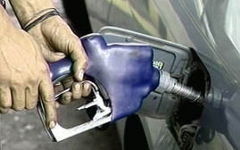
|
Frenzy
To Fill Up! Costa Rica With the
Highest Prices in Central
America
For those who didn't fill up
yesterday, there are in for a
whopping surprise, as gasoline
jumped ¢51 colones per litre
at the stroke of midnight.
A litre of super gasoline
costs now ¢526 colones
(us$1.03 or us$3.92 a US
gallon), regular jumped to
¢504 (us$0.99 or us $3.75
a US gallon) and diesel jumped
to ¢334 (us$0.66 or us$2.50 a US
gallon).
For Canadians, that's -
us$4.67 for super and us$4.49
for a gallon for regular and
regular us$2.99 - since the
imperial gallon is bigger than
the US gallon, eh!
The increase, approved last week
by the Autoridad Reguladora de
Servicios Públicos (ARESEP) went
into effect at midnight
following the publication in the
official government newspaper La
Gaceta.
Lines at gasoline stations were
not that long last night, as
many drivers took the time to
fill up during the day or the
night before.
In Costa Rica, all public prices
are set by the ARESEP. In the
case of gasoline, the Refinadora
Costarricense de Petroleo (RECOPE)
- the state monopoly on oil
imports, refinery and
distribution - must first make a
request to the ARESEP for a
change - up or down - and then
must be approved by the ARESEP
and published in La Gaceta.
Once it is published in La
Gaceta, gasoline station owners
can then change the price at the
pumps.
The process can take as little
as week and is completely
public.
Complaints have been made during
past increases of gasoline
station operators closing their
service the day before the
increase, claiming they have no
fuel to dispense, taking
advantage of selling the lower
cost gasoline at higher prices
the following day.
Several gasoline stations have
been investigated and no charges
have been laid.
Today's increase is the largest
in one single increase. RECOPE
blames high prices for crude oil
on world markets. However, some
drivers interviewed while
filling up feel it has more to
do with government taxes on the
product that is keeping prices
high.
The increase will surely have a
rippling effect as many other
services like buses, taxis and
transport companies will be
seeking increases to offset the
rising costs of fuel, which in
turn will increases in other
areas.
The ARESEP is waiting for a new
"regulador", during which time
no price changes can be made.
The process of selecting and
approving a new regulador is
expected to take a month, which
means high gasoline prices will
be with us during that time or
longer, no matter is theprice of
crude on world markers drops.
With today's increase, Costa
Rica now has the distinction of
having the highest gasoline
prices in Central America.
Puva Vida, Mae!
|
|