|
New Public Phones Allow Text
Messaging
Each passing day technology gets
closer to every citizen, like
the new public telephones that
the Instituto Costarricense de
Electricidad (ICE) has been
quietly installing in
replacement of the older and not
so functional public telephones.
The new public telephones called
"multi pago" because they accept
various types of payments -
coins, both the 199/197 (Colibrí
cars) and chips - offer more
than for making a phone call,
they also allow the sending of a
text message to a cellular phone
or email.
And the best is that during the
testing period, all text
messages sent from the multi
pagos is free, yes, free!
The reason for the free
messaging service is that units
and the service is new and ICE
has not yet received rate
approval by the Autoridad
Reguladora de Servicios Públicos
(Aresep), the state agency that
regulates prices for public
services, who is evaluating the
units.
ICE began to install the new
public telephones in October,
but has kept it under wraps,
allowing users to discover the
phones and services for
themselves.
In many cases, the new units are
being placed next to the older
public phones, while in other
cases, they are replacing the
older and out of date public
phones that for the most part
did not work properly. Some of
silver plated coin phones are 30
years old, while the newer
'blue' phones that accepted the
chip only worked some of the
time, and the newer dark grey
phones only accepted the Colibrí
cards.
Many a user found using the
nearest public phone a dilemma
if they did not have the right
payment method - a coin, a
colibrí or chip card - which
made placing a call frustrating
at best. The new public phones
solve that problem.
ICE says it will install 8.000
of the new public phones,
however, not all will have the
text messaging function working.
ICE says only 25% of the new
phones will allow the text
messaging, for now, until the
Aresep approves the rate for the
servce.
Placing a call to a cellular or
fixed line phone will cost the
same as the older public phones.
Giselle Mejía, director of
public telephones for ICE,
explained that 10.000 complaints
are received a month of public
telephones not working and that
20% of the calls for reporting
damage to public telephones due
to vandalism.
Mejía explains that some believe
that public phones cost nothing
and thus have no problem abusing
them. However, Mejía, says, that
is far from the truth, as many
as 1.5 million users - both
residents and visitors - depend
on public phones.
The new phones, Mejía explains,
are sophisticated computers that
allow the use of different
paying methods and text
messaging and are more resistant
to abuse, vandalism and climatic
conditions.
ICE is keeping quiet, for now,
the cost of the new public
phones.
|
|
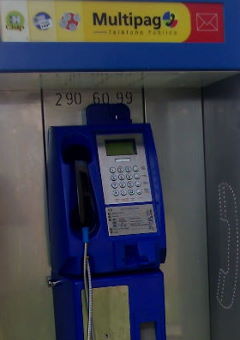
The
new "multipago" public phones
replace the older phones that in
some cases were 30 years old>
The new phones accept all forms
of payment - coin and cards -
and can send text messaging to a
cellular phone or email. |
|
|
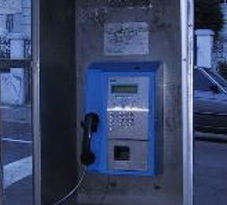
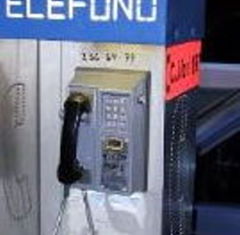
The
chip phone (above) and the
colibri phone (below) accepted
only their respective payment
method and often left users
frustrated. |
|
|


