


Central American migrants deported from US and Mexico face danger and debt
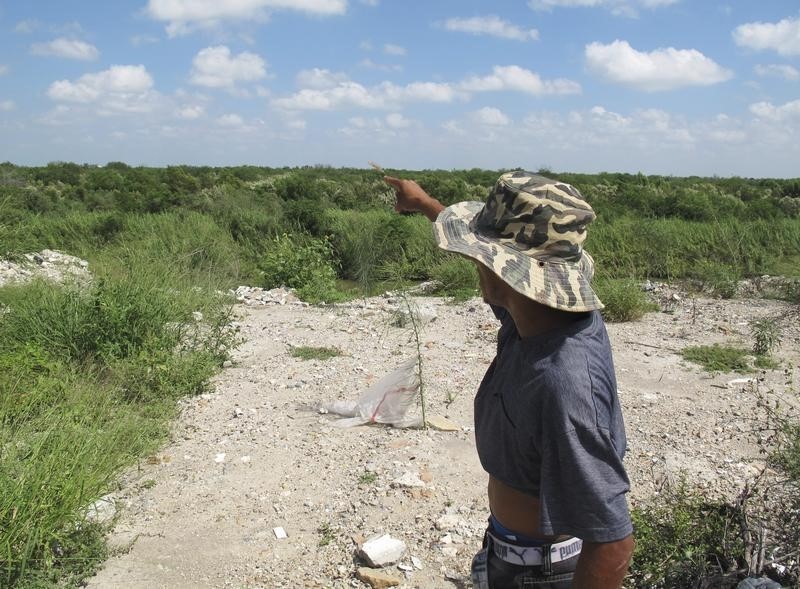
Honduran migrant Juan Marcos Guardado points to the United States across the Rio Grande (Rio Bravo), the border between Mexico and the U.S., as he speaks to Reuters in Reynosa October 2, 2014. Tens of thousands of Central American migrants are being kidnapped, abused and extorted by Mexican gangs just yards from the United States in a growing racket that may be worth up to $250 million (155.61 million pounds) a year. Guardado, a 27-year-old roofer, said he was betrayed by a fellow Honduran shortly after arriving by bus in Reynosa. The man handed Guardado over to men who said they were members of the feared Gulf Cartel and extorted $1,500 from his relatives. They then passed him onto another kidnapping group. The kidnapping of Central American migrants, some of the poorest people in the Americas, is not new. But a recent surge in the number of Central American migrants heading for the United States – coupled with successful operations by Mexican security forces to disrupt cartels’ drug business – has turned a former sideline into an increasingly important revenue stream for rank and file cartel members. REUTERS/Simon Gardner
By Anastasia Moloney
BOGOTA, December 11th, 2015 (Thomson Reuters Foundation) – Hundreds of thousands of Central American migrants, including children, are deported by the United States each year to their home countries where they face gang violence and a lack of state services to help them reintegrate, researchers said.
Poverty, few jobs, and rampant gang violence push people from the so-called Northern Triangle countries of El Salvador, Honduras and Guatemala – a region with the world’s highest murder rates – to seek jobs and refuge in the United States and other Latin American countries.
But as authorities in the United States and Mexico beef up security and police patrols along their shared porous border, increasing numbers of migrants are deported back to Central America.
From 2010 to 2014, 800,000 people from Northern Triangle countries have been deported from Mexico and the United States, figures from immigration authorities published in a report by the Washington-based Migration Policy Institute show.
“Many deportees arrive in their country of origin only to find themselves in worst circumstances than before they left,” said the report published this week.
“They and their families may be in crippling debt after having paid between $4,000 and $,7,000 to smugglers, they have few skills that might help them find employment, and many are returned to unsafe neighbourhoods and schools controlled by the gangs they tried to flee in the first place.”
A significant proportion of those returning see little choice but to try again to reach the United States, the report said.
Most Central American children arriving in their home countries are deported by Mexico, which has stepped up border patrols.
Mexican deportations of unaccompanied children back to the Northern Triangle countries have tripled to 7,800 in 2014 from 2,400 in 2010, the report said.
The flow of migrants from Central America was described by the United Nations refugee agency in October as a “refugee situation” unfolding in the region as people seek safety from gang violence.
Authorities in El Salvador, Guatemala and Honduras have increased the number of centres receiving deported migrants when they first arrive, providing most with a snack, hygiene kit, water, a free phone-call and sometimes bus fare to return home.
But in Guatemala there are no reception centres for people who have been deported by land, often by bus from Mexico, and reintegration programs that offer job and skills training reach just a fraction of deportees, the report said.
“And without substantial financial support by international donors, opportunities to reach more deportees and provide and alternative to remigration are slim,” it said.

ATTENTION: If you are seeing this message,

