


1,000 Cuban migrants remain stranded in Costa Rica; authorities establish emergency shelters
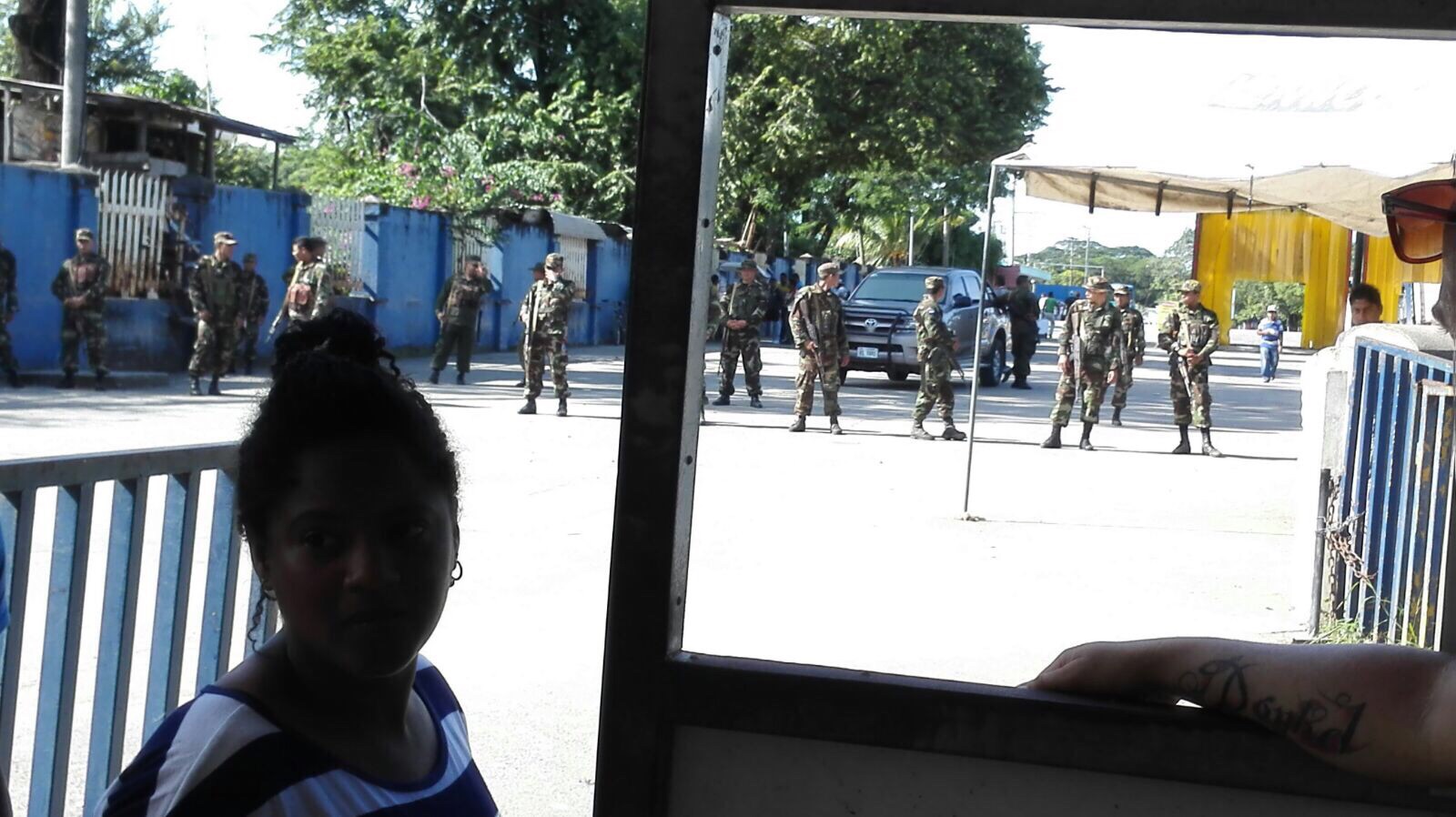
Nicaraguan Army troops were deployed to the Costa Rican border to repel more than 1,000 Cuban migrants arriving from Costa Rica. (Photo courtesy of the Costa Rican Foreign Ministry)
November 19th, 2015 (EFE) About 1,000 Cuban citizens who are stranded in Costa Rica on their journeys to the United States, remain housed in six shelters outfitted by local authorities.
The National Emergency Commission reported on Wednesday that the six shelters house a total of 982 Cubans, while another 400 who have not wanted to go to the shelters are at the Peñas Blancas frontier crossing post on the border with Nicaragua.
Organizations and university students have joined the humanitarian efforts to help the migrants including donating and preparing food, while the Red Cross is attending to their health care needs.
About 2,000 Cubans, who are carrying passports and legally left the communist island, have entered Costa Rica since last Saturday across the border with Panama, after the Costa Rican government granted them 7-day visas.
However, when hundreds of these migrants arrived at Costa Rica’s border with Nicaragua on Sunday, Nicaraguan authorities refused to allow them to enter the country and used army troops and police to repel about 800 who tried to cross illegally.
This situation has increased the tension in the already-deteriorated relationship between Nicaragua and Costa Rica.
Nicaragua accused the neighboring country of “launching” the Cubans toward its territory and causing a humanitarian crisis, while Costa Rica says that it has acted in accord with international law by authorizing the visas for the migrants.
The Cubans originally left their country by air for Ecuador, where they do not require a visa, and from there they traveled illegally through Colombia and Panama until they got to Costa Rica.
On Tuesday, the Cuban government attributed this situation to U.S. immigration policy vis-a-vis the communist island and said that it is in contact with Costa Rica and Nicaragua to find a “rapid and appropriate” solution to the problem.
U.S. policy “spurs illegal immigration” from Cuba, violates immigration accords that are in place between Washington and Havana and creates problems for other nations, the Cuban government said.
Costa Rica is organizing a meeting of foreign ministers from Mexico, Ecuador and possibly other nations with the aim of analyzing joint immigration actions, in particular creating a humanitarian corridor for the transit of Cuban migrants.

ATTENTION: If you are seeing this message,
- Joe
- Ken Morris
- prdatki
- prdatki

