


Jack Donnelly: A newcomer’s guide to “Tico-Mex” cuisine
September 4,th 2015
By Jack Donnelly, ICR News contributor
Mexican cuisine is one of the great culinary influences in the world today, along with Chinese, Italian, and others. Tacos, burritos, nachos, refried beans (an unfortunate mistranslation we will never get back: it should be well fried beans), pico de gallo, and many other Mexican dishes are found the world over. Costa Rica is no exception and, as in other countries, Ticos have adapted comida mexicana to local tastes.
I often have Gringo friends visiting Costa Rica tell me the Mexican food here isn’t real or authentic, like it is back in Wherever, USA. I explain that Tico-Mex dishes are not the same as Gringo-Mex, and neither is equivalent to Mexican-Mexican cooking. Additionally, many are accustomed to Tex-Mex, an entirely legitimate cuisine in the US, but not the world standard for Mexican cooking. Tico-Mex cooking is a separate style of food, and one well worth exploring for what it is: different, but yummy.
I think the best places to experience Tico food, including Tico-Mex, are the countless small bar-restaurant hole-in-the-wall establishments found all over the country (not Gringo-geared tourist eateries—they emulate US style food). The key to eating this way is to understand every place is different—a taco in one place is not the same as a taco across the street. The challenge and joy of grazing around Costa Rica is to explore, eat, and learn.
Following are some examples of Tico-Mex that warrant some discussion.
PICO DE GALLO
Pico de gallo (also known in Mexico as salsa casera, salsa cruda, salsa bandera, etc.) translates literally as rooster’s beak, although there are different explanations of the reasoning behind the name. I have always subscribed to the theory it refers to the chicken feed-like texture and appearance of the mix. The term gives rise to some discussion in Costa Rica. Chimichurri is Tico pico de gallo, sort of—opinions vary.
Pico de gallo is made from chopped tomatoes, minced onion, cilantro (culantro in Costa Rica), lime juice, and chile peppers (commonly jalapeños or serranos). Costa Rican chimichurri is at least chopped tomatoes, usually with minced onion, often with cilantro and lime juice, but pretty much never with hot peppers. The confusion arises from the fact that chimichurri is an Argentine steak sauce made from finely chopped or processed fresh parsley and oregano, garlic, red pepper, olive oil, and vinegar.
One purist friend of mine insists chimichurri can only refer to the Argentine green steak sauce and pico de gallo is what is served in Tico restaurants. I counter that I have been eating pico de gallo in Mexico for almost fifty years and I have never tasted it without hot chile, often quite a bit—no picante, no pico de gallo. We have agreed to disagree.
Persnickety squabbles aside, chimichurri is the more common name in Costa Rica for the salsa made of diced tomatoes, onions, etc. However, if you like, please feel free to call it pico de gallo.
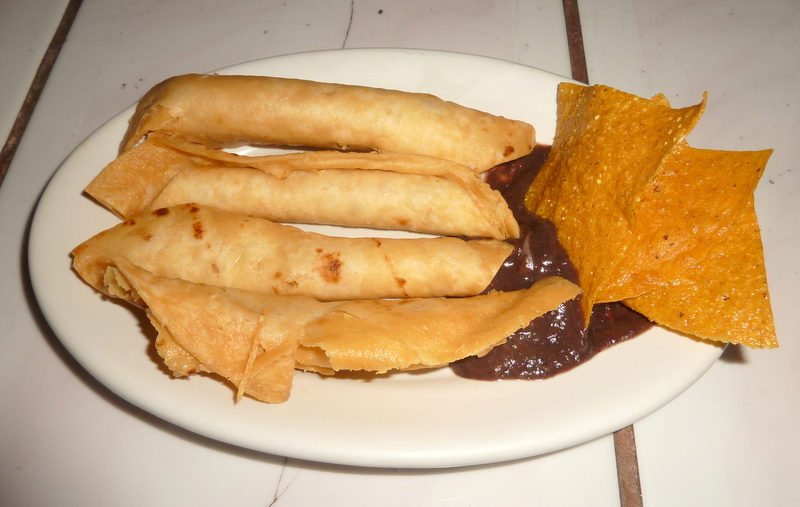
Tico-style tacos, in this case tacos de queso (cheese tacos) (Jack Donnelly for ICR News)
TACOS
Most tacos served in Mexico are soft tacos, a soft warm corn tortilla filled with meat and usually spiced with onion, cilantro, and salsa picante. Flautas (flutes) in Mexico are fried hard tacos, sometimes called tacos dorados, golden tacos. Overall, soft tacos are the order of the day in Mexico.
Tico tacos are hard tacos and are generally made with a wheat flour tortilla. They can hold anything in the way of meat, chicken, fish, cheese, beans, etc. Most are made with the tortilla completely rolled around the contents. These hard tacos are commonly fried along with the filling and may sport additional toppings of ground beans, chimichurri, cheese, sour cream or salad. Some bars offer fried mini tacos using corn tortillas—at times jokingly referred to as cartuchos, cartridges. If you are not a big ketchup and mayo fan, you should stipulate that you would like your salsas on the side rather than slathered all over your tacos in the kitchen.
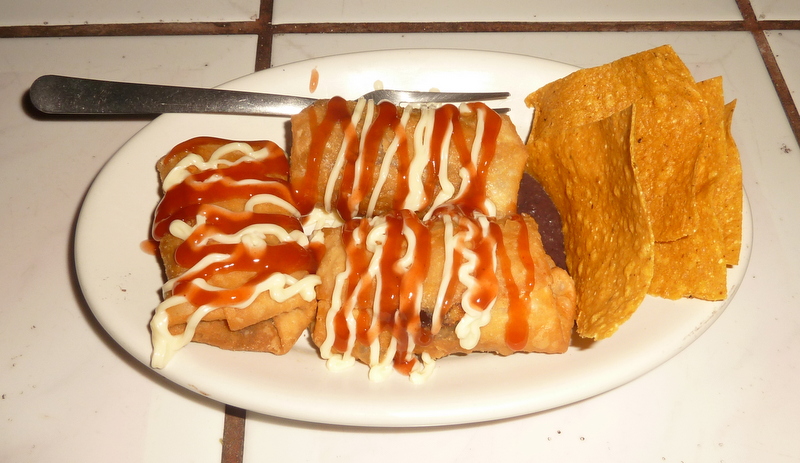
Typical Tico-Mex burritos, with ketchup and mayo (Jack Donnelly for ICR News)
BURRITOS
A Tico burrito is a deep fried (and deeply fried) envelope or packet of wheat tortilla with a stuffing of beans, meat, cheese, chicken, etc. Sometimes, you will find grilled burritos, but I think they can be a little dry and chewy. Some places will give you a choice between one large burrito or several small ones. They may have different fillings and will usually be served with different sides—ground beans, cabbage salad, tortilla chips, fries, etc.
Again, unless you stipulate otherwise, your meal will almost certainly arrive crisscrossed with red and white lines of mayo and ketchup—salsas.
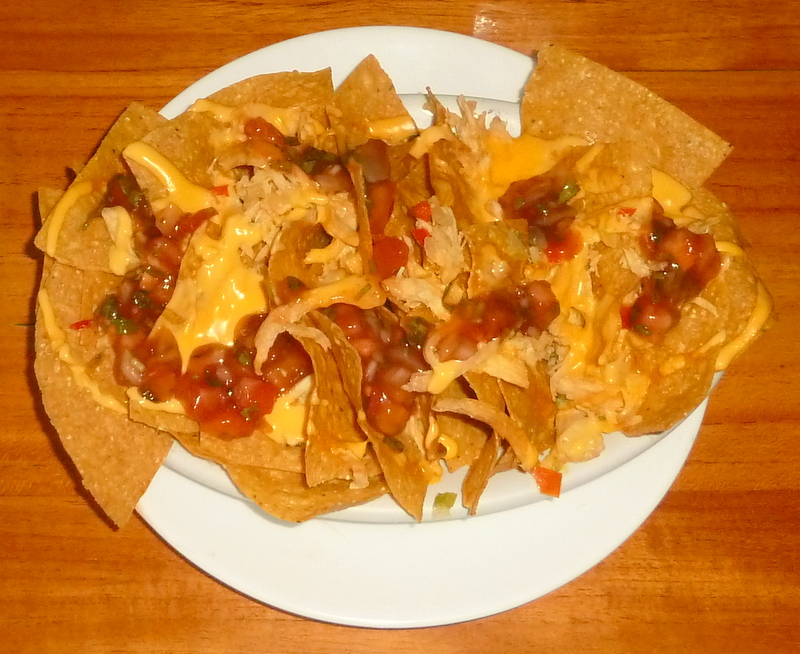
Typical Tico-Mex nachos (Jack Donnelly for ICR News)
NACHOS
I had always thought nachos were a US Tex-Mex creation. In fact, they are Mexican, but just barely. They were invented in Piedras Negras, Mexico, across the border from Eagle Pass, Texas. In 1943 a group of US military wives stopped in a restaurant there. The maȋtre d’, Ignacio “Nacho” Anaya, scrambled to make them a snack with what he had on hand after a busy day. He called it “Nacho’s Especiales” and the name evolved from there.
The dish soon became popular on the US side of the border and spread out from Texas to the entire country. Ironically, the dish probably made its way back south to Mexican resorts via US tourists asking for them. Today, they are all but universal.
In many Tico restaurants, nachos are still a work in progress. They lack the melted cheese, jalapeño slices, chili beans and such that make this dish so decadently delicious. Shredded meat or chicken is commonly sprinkled on top of the chips. They are usually served at room temperature and may be topped with a shredded cheese like mozzarella. Additional Tico-Mex nacho toppings may include chimichurri, shredded cabbage, lettuce, natilla (sour cream), mayo, ketchup, etc.
I frequent one local watering hole—a real townie little place—that makes a good plate of nachos and I order them there regularly. However, this is a dish that may fall short of expectations, so you should check it out before ordering.
¡Buen Provecho!
Read more by Jack Donnelly:
Jack Donnelly: The origin of the Costa Rican expression, “Upe”
Christmas Tamales – an essential part of Costa Rica’s holiday tradition
Archaeological sites worth visiting in Costa Rica


ATTENTION: If you are seeing this message,
- Ken Morris
- jerrymyers
- http://therealnicaragua.com GringoLoco
- Jon Gulah
- jerrymyers
- Jon Gulah
- jerrymyers

