


Help track down illegal fishing boats in Cocos Island, Costa Rica from your computer
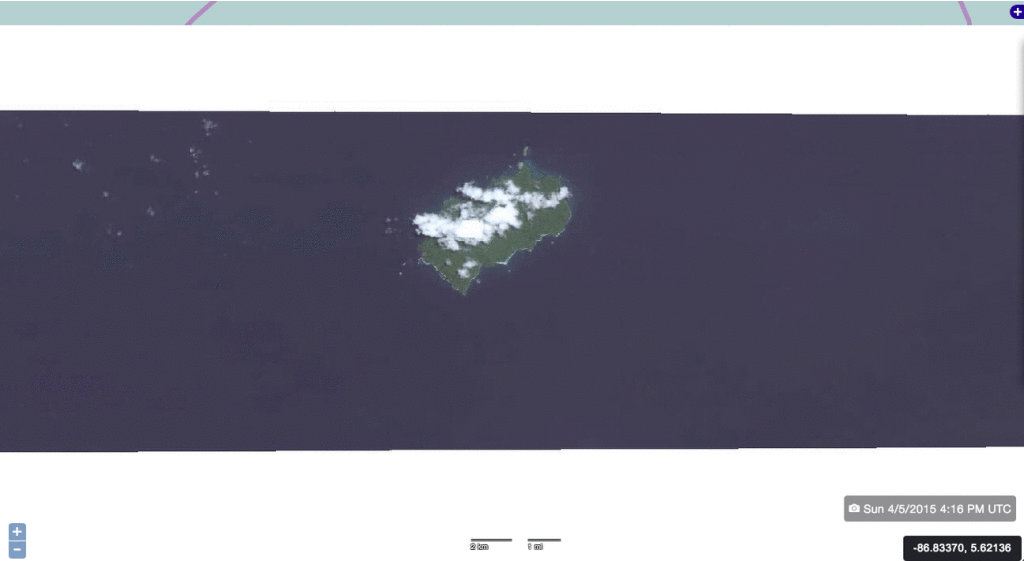
Using satellite imagery and the Tomnod project, anyone can help find and flag illegal fishing vessels at Costa Rica’s Cocos Island. (Tomnod)
Joanna Nasar, [email protected]
August 19th, 2015 (ICR News) Turtle Island Restoration Network announced on Tuesday a new pilot program to find illegal fishing vessels within the Marine Protected Area surrounding Cocos Island, Costa Rica. Turtle Island teamed up with DigitalGlobe’s crowdsourcing platform, Tomnod.com, to create one of the first crowd sourced, digital patrols of the marine hot-spot.
Cocos Island is an important stop over for large marine wildlife like hammerhead sharks, Galapagos sharks, tiger sharks, blue sharks, whale sharks, dolphins on their oceanic migrations. The Island is also a home to green and hawksbill sea turtles, who find refuge in the coral reef. Underwater explorer Jacques-Yves Cousteau dived at the Island and called it “he most beautiful island in the world.”
Yet, sadly this blue gem is under attack by illegal longline fishing vessels that enter into the marine protected zone that extends around the Island in search of tuna, sharks and Mahi mahi.
Longline fishing is a deadly type of fishing that consists of setting a main line with hundreds or thousands of baited hooks and then indiscriminately catching, harming or killing whatever swims into the line.
This practice is draining the seas of endangered marine wildlife. Air breathing endangered sea turtles that swim into the lines, will often drown, unable to come up for air, while sharks that must swim to force water to the gills are also unable to stay alive when caught.
Furthermore, longlining inside the protected marine reserve, national park and UNESCO World Heritage site around the Island is especial egregious as it puts vulnerable and endangered marine wildlife populations in extreme danger, and leaves the zone littered with fishing gear.
The innovative partnership between Tomnod and Turtle Island Restoration Network aims to protect the Island’s marine biodiversity by using crowd sourcing to catch vessels fishing within the preserve illegally.
Tomnod, a project owned by Colorado-based satellite company DigitalGlobe, has been used in the past to locate refugee camps in Somalia, search for the tomb of Genghis Khan, map damage caused by Typhoon Haiyan, and in the search for Malaysia Airlines Flight 370.
To participate in the hunting and flagging of illegal fishing vessels and help save the unique marine life of Cocos Island, simply visit http://www3.tomnod.com .

ATTENTION: If you are seeing this message,
- Ben

