Subscribe via E-Mail

Get all of our news delivered fresh to your inbox every morning! Just tell us your name and where to send it using the form below.

PS – We hate spam too. We don’t sell or share our list with anyone, and we never send commercial email.


luxe
Friday, January 29th, 2016  |  USD: Buy 531.29 / Sell 543.92
20 years

Cost of building a home would increase as much as 14 percent if tax plan is approved, Costa Rica builders warn
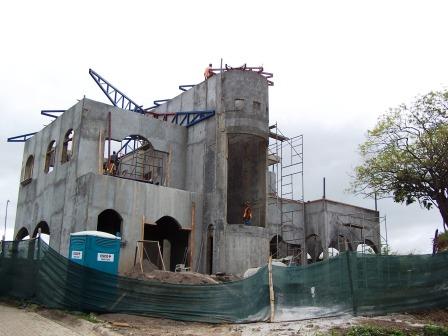
house under construction

(ICR archive)

August 12th, 2015 (ICR News) The Costa Rican Chamber of Construction (CCC) is warning that the cost of building a home could rise by as much as 14 percent if a tax reform being pushed forward by the Solis administration to abandon the current sales tax in favor of a new value-added tax (VAT) is approved.


Under the reform, contractors such as engineers, architects, construction crews, welders, and electricians, amongst others, would be forced to charge a 15% VAT tax on the services they provide during the construction of a home, an additional cost that would be directly passed on to homebuyers, the chamber warns.


“This proposed [reform] will affect the [construction] sector, as the increase in costs will result in lower investment and higher unemployment,” Randall Murillo, the chamber’s executive director said.


In addition, the increase in housing prices would make home ownership even more out of reach for many Costa Ricans, resulting in less government revenues in the form of property taxes, Murillo said.


Costa Rican president, Luis Guillermo Solis warned late last month that the country’s economy could not survive another year without new tax revenue to tackle the government’s soaring fiscal deficit.


The Solis administration released some details of its plan for tax reform on Monday, encompassing six bills that would significantly increase citizens’ and residents’ tax burden.


In addition to the VAT, other reforms included in the plan include doubling the transfer tax on real estate from 1.5% to 3%, doubling the transfer tax on motor vehicles from 2.5% to 5%, more than doubling the income tax (for those required to pay it) from 10% to 25%, and a 15% tax on all forms of capital gains.


The reforms are facing strong opposition in the Legislative Assembly, with lawmakers from seven out of nine political parties opposing the reforms.


costa rica news

ATTENTION: If you are seeing this message,


Advertisement


Get our news delivered fresh to your inbox every morning.

Click here to subscribe to our email list. We hate spam too and never send commercial email.

Like us on Facebook and receive our news in your timeline

  • winkdarren

    It would increase it more! The cost of materials would go up 2% (13% – 15%) then you’d be paying 15% tax on the construction (service) itself. Not to mention VAT’s tend to actually result in an increase around double the actual tax amount, due to the fact that the VAT is charged numerous times from start to finish. You should really expect the cost of building a home to go up more like 17% at a minimum to as much as 32% -
    sorry posted on the wrong page earlier.

    • Derryl Hermanutz

      A business charges and collects the 15% VAT on the retail price of its goods and services; and the business pays the 15% VAT on the cost of all its inputs such as materials, etc. The business writes off the tax paid against its tax collected, and pays the net tax. So each business only pays net tax on the “value added”: the difference between the total cost it pays for inputs, and the total price it charges for its outputs.

      I was in the construction business in Canada when Canada converted from a 12% tax on manufacturers (including manufacturers of all the construction materials I used) to a much broader 7% tax on goods and services (the GST). I added GST to my prices, and paid GST on my purchases, and submitted the net tax to the government. The price of building materials dropped a bit when the 12% MST was replaced by the 7% GST. But the main result was that the tax was “visible” to the consumers who ultimately pay the tax whether it is embedded in prices or whether it is shown as a separate charge.

  • Ken Morris

    So, the theory is that housing construction is such an important public good while the barbecue sandwich I had for lunch isn’t that my sandwich deserves to be taxed at a higher rate in order to subsidize lower taxes for the construction industry?

    OK, I’ll go with that. Let’s eliminate the taxes on the first $50,000 of per unit construction costs and increase the taxes on my sandwich enough to offset the shortfall.

    Better yet, why not raise the taxes on per unit construction costs above $50,000 in order to offset the tax break on the first $50,000 and leave my sandwich alone?

    Honestly, home construction may well be in the public interest–but surely only if the public at large can afford to buy or rent the houses.

    Smart tax policy, including tax breaks for the construction industry, could actually serve the public good, but if these guys just want to raise the taxes on my lunch in order to build McMansions, forget it.

    • Ben

      Ken what country do you live in? Costa Rica is a real mess. Hear are the facts on Costa Rica and the goverment.

      1. 11% unemployment and growing very fast
      2. Broken roads system
      3. Over payed and corupt public sector workers
      4. Over priced grocery stores
      5. Highest Gas prices in the America´s
      6. Broken Health Care System
      7. Growing Crime rate over 240 murders so fare in 2015
      8. Lazy and corupt elected goverment officials
      9. Power costs have gone up by 20%
      10. Many Companies are leaving Costa Rica and layoff are growing very fast
      11. Strikes in Costa Rica are every other day
      12. The country is broke and the new tax system is going to drive people to starve.

      Your right Ken everything is great and wondeful in Costa Rica just like Greece .
      Wake up.

      • Ken Morris

        Excuse me, I must be dozing off, but I missed your explanation for how selectively allowing the construction industry to be taxed at a lower rate than everyone else solves the 12 problems you list.

        But thanks for pointing out that Greece’s problems were rooted in not lowering taxes on the home construction industry. I must have been sleeping when this was reported too.

        • disgusted

          Have you seen the ads on billboards and buses about a $500 per month house?/ With Astrix *? I had a Tica friend call the number and get some information. They were very cautious and said they would set up an appointment to discuss. She said tell me how many years and what interest and the cost of the house and where. Again, make an appointment to discuss….. I am sure it like 30% interest or more and 30 year loan. She is a school teacher on her salary she said she could not afford it. Now add 15% more to that Yikes!

          • Ken Morris

            No, I haven’t seen these billboard ads, but in general know that in the fine print a huge downpayment is usually stipulated.

            I also personally had a brief brush with bank mortgage loan clerks and said, “forget it.” Not only are downpayments and interest rates as well as fees high, but the banks also require the mortgage holders to take out an INS life insurance policy.

            The banks take zero risks when making mortgage loans to regular people, though strangely are rumored to be sitting on a pile of bad mortgage debt for large developments like shopping centers and condo complexes. My understanding is that when banks lend to developers, they do so on the basis of the forecasted income the property will generate (and no surprise those forecasts are frequently wrong). However, when they lend to owner-ocupants, they demand a lot of cash and insurance up front, plus of course verification of current income.

            There are, I understand, various state-mandated mortgage programs targeting the working and middle classes, but I’ve also read that very few people ever actually qualify for these mortgages because qualifying involves too much red tape.

            At the low and middle end, my impression is that most Ticos either live in inherited family housing owned outright, pay rent, or luck into an informal deal. When they build, they do what two Ticos I know do: They buy some land, paying it off as quickly as they can, then slowly pay cash for construction costs they oversee personally. The result in both cases I know are half-finished houses. One doesn’t live in his yet, but still lives with his mother. The other lives in hers, but without plumbing or electricity. She runs a water hose from a neighbor’s house for that and just deals with no electricity.

            The tragedy in all this is that I see no market reason why decent $40,000 houses can’t be built and Ticos can’t buy them for $4000 down and $250 a month.

  • Ben

    Taxes on home building products are already large and 15% more. Good luck on Building in Costa Rica. IF you build a house for $100.000 dollars in Costa Rica it will cost you and extra $15.000+ and that´s alot of money. Nobody Build´s for $100.000. They alway build for more.

Popular Content