


Worst drought in more than a century forces Panama Canal to reduce cargo limits
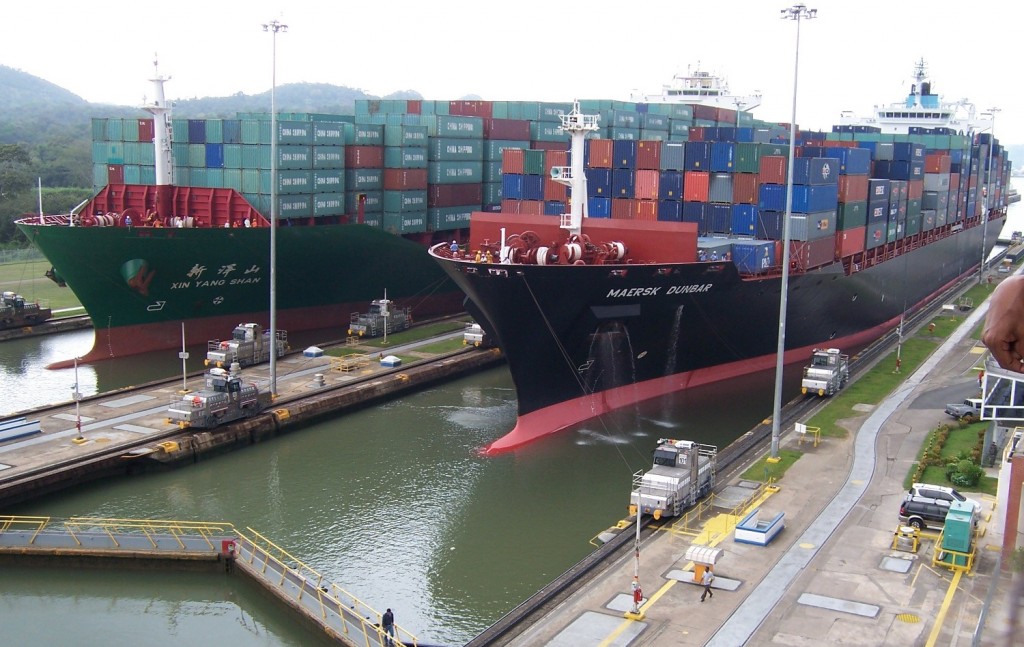
(Archive / Creative Commons)
August 10th, 2015 (EFE) The Panama Canal said it will lower the maximum allowable draft of ships passing through the inter-oceanic waterway starting Sept. 8 due to an El Niño-triggered drought.
The measure will affect 18.5 percent of the ships that travel through the canal, according to the Panama Canal Authority, or ACP, which said it will not significantly affect “the efficiency and capacity” of the waterway’s operations.
Ships will be forced to reduce their cargo because the maximum allowable draft will be set at 11.89 meters (39 feet), down from the current level of 12.04 meters (39.5 feet).
A similar measure was adopted in 1998, also because of a severe drought affecting the Central American country, the ACP said.
The maximum draft could be further lowered to 11.73 meters (38.5 feet) if the drought persists, the ACP said, adding that it will give four weeks’ notice if it decides to take that step.
A ship’s draft is the depth of a vessel’s keel below the water line.
A total of 202,000 cubic meters (53 million gallons) of fresh water are required to transport one ship through the canal’s multi-tiered lock system.
Panama’s rainy season typically runs from April to November, but the amount of precipitation has been lower than normal this year because of the El Niño weather phenomenon.
Panama Canal Administrator Jorge Quijano said two weeks ago that the worst drought in more than a century struck the country between June and the first half of July, lowering water levels at the Alajuela, Miraflores and Gatun lakes that supply water for the canal’s locks.
The 80-kilometer (50-mile) inter-oceanic waterway, which was under U.S. control from 1904 until Dec. 31, 1999, currently handles roughly 6 percent of global trade.
In 2007, administrators launched a $5.25 billion canal expansion project, including construction of a third set of locks that will enable the waterway to accommodate “post-Panamax” ships.
Those modern ships – used by the energy, and particularly the liquefied natural gas, industry – hold up to 12,000 20-foot-long containers and are three times bigger than what the canal can currently handle.
With the new set of locks, due to begin operating in April 2016, the canal will be able to handle up to 600 million tons of cargo annually, double its current capacity.

ATTENTION: If you are seeing this message,
- http://www.myseniormoment.org/ SeniorMoment (pen name)

