Subscribe via E-Mail

Get all of our news delivered fresh to your inbox every morning! Just tell us your name and where to send it using the form below.

PS – We hate spam too. We don’t sell or share our list with anyone, and we never send commercial email.


luxe
Friday, January 29th, 2016  |  USD: Buy 531.29 / Sell 543.92
20 years

Is this classic Costa Rican children’s book racist?
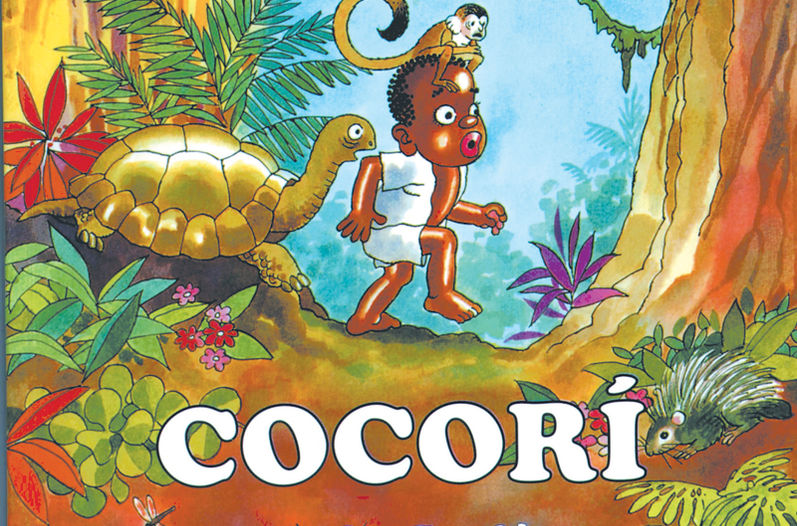
difusion-publica-Cocori-polemica-LN_LNCIMA20150423_0050_5

LIMA, Peru — A fond account of the adventures of a black youngster, or a racist caricature of an entire culture? That’s the question at the heart of a debate raging in Costa Rica over the children’s book “Cocori,” long regarded as a national literary classic. Written in 1947, it tells the tale of Cocori, an…


costa rica news

ATTENTION: If you are seeing this message,


Advertisement


Get our news delivered fresh to your inbox every morning.

Click here to subscribe to our email list. We hate spam too and never send commercial email.

Like us on Facebook and receive our news in your timeline

  • disgsted

    I grew up reading ” Little Black Sambo” the adventures of a black India boy who disobeyed his mother.. Even had a Sambo’s Restaurant I use to go to in the 70′s. Fast forward racist and depitced the black boy and family I guess unflattering way. The aurthor wrote this just for amusement. So Now this Cocori I guess as well will be seen as such. Shame how everything gets spun into something bigger.

  • expatin paradise

    I haven’t read this one, but there is nothing I have read that characterizes the black boy as malicious or anything but sweet. The innocent descriptions of the racial differences are sweet. There are curriosities when people are first exposed to members of different races. I remember about 40 years ago, I had a kinky beard, and an older black woman in my office timidly asked if she could touch it, then was surprised at its softness. I can see some bigots becoming upset because of the interracial aspect, but let them tell it to the Kardashians.

    In the 1960s, “Little Black Sambo” got the same hypersensitivity treatment. It was clearly about an Indian boy, as evidenced by tigers, not Lions, being principal players.

    Instead of pretending that racial differences don’t exist, we shouldf acknowledge the differences and the problems (Dr. Phl would say that you can’t change a thing unless you first recognize the problem). We should not ignore the past, but learn from it. If this book is used in schools, the lessons should include a discussion of the fact that there was a time when some black people had never seen whites and vice versa, and also of how funny the first-impression descriptions are in the story. That discussion could be expanded into one of different local ethnic groups and their customs.

    I think that it is wonderful that Costa Rica has this piece of literature with which people can identify and in which they can take pride.

  • zzzzz

    When I moved down here in Costa Rica a few years ago, one of the most striking cultural surprises was the antiquated cultural insensitivity (racism) that was nothing short of of shocking. When EVERY Asian is referred to as “Chino” or Chink and this even right to their face, really, you get an idea. The comments on black people are generally negative. Opening my eyes, I realize that many Latin cultures are in this mind frame in the sense that mild racist behaviour is prevalent. I think the conversation about about sensitivity to others is long overdue. There are old literary texts that contain racist writings and it does not mean we should burn the books but it is very much needed to teach CR children to be sensitive at least more sensitive to other cultures.

Popular Content