


Bill to shutdown Roads Authority “almost ready,” President says
(ICR Archive)
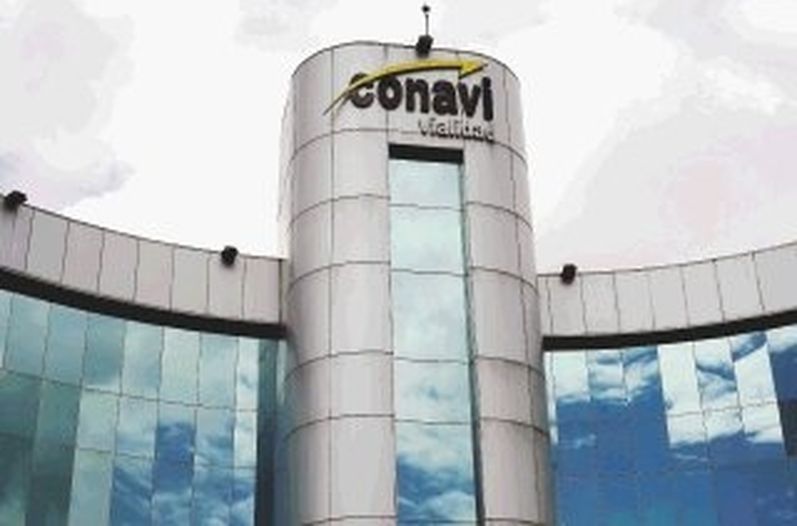
May 12th, 2015 (InsideCostaRica.com) Efforts to shutdown the National Roads Authority (CONAVI) are moving forward, Costa Rican President Luis Guillermo Solis said during a Monday press conference.
Responding to a reporter for CRHoy.com, the president said that a plan being drafted by the Ministry of Public Works and Transport (MOPT) – which has authority over CONAVI – “is almost ready” and the Executive expects minister Carlos Segnini to present the plan in the coming days.
In addition to the closure of CONAVI, the bill would also eliminate the National Concessions Council (CNC).
The bill aims to create a large, new institute called the National Infrastructure Institute (INI) which would absorb both of the functions currently conducted by Conavi and the CNC. The INI would be a large government institute, on the scale of the Costa Rican Electricity Institute (ICE).
Calls for the closure of Conavi began in October of 2013, when the Public Ombudsman’s Office, known locally as the Defensoría de los Habitantes, recommended the immediate closure of the institution.
In its report at the time, the Ombundsman’s Office said that lack of investment, poor execution and bureaucracy at Conavi were responsible for the vast majority of the 1,330 bridges in the country being in “deplorable” conditions.
The report continued that Conavi had failed in its administrative function to manage resources and implement infrastructure works to meet the country’s needs.
“By the clear deterioration in the national road network and bridges it can be concluded that Conavi is not able to fulfill its functions in terms of maintenance and upkeep, nor has it achieved acceptable performance in managing new works,” the report continued.
“[…] Irregularities and deficiencies […] coupled with the country’s failing road infrastructure make it clear the need to analyze the appropriateness of the current management model,” the 2013 report concluded.
A report last year from the International Monetary Fund (IMF) would support this view.
In a report it issued in early 2014, the IMF pointed out that Costa Rica has the highest gasoline prices but the worst roads in Central America. One-third of the cost of fuel in the country is actually tax that is delivered to Conavi, intended for road maintenance and repairs.

ATTENTION: If you are seeing this message,
- http://alligatorsnroadkill.blogspot.com/ John Dungan
- Yeims

