


Costa Rica’s coffee growers have two years to phase out dangerous pesticide
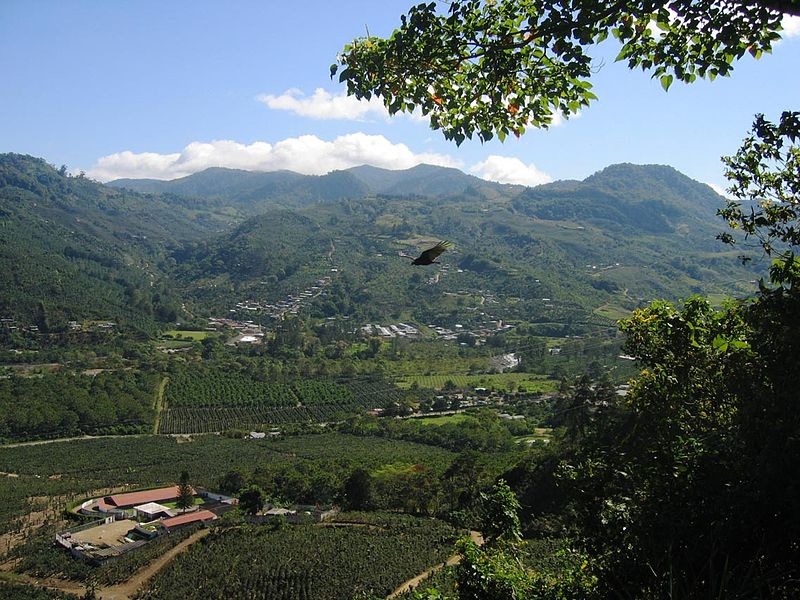
A coffee plantation in the Orosí valley (Wikimedia Commons)
March 31st, 2015 (InsideCostaRica.com) A decree signed by President Luis Guillermo Solis as well as the ministers of agriculture, environment, health and labor will give Costa Rica’s coffee growers the next 24 months to phase out the use of a highly toxic pesticide known as endosulfan. The decree took effect on Monday.
The decree immediately bans the import, export, manufacture, storage, distribution, sale, or handling of any product containing endosulfan by anyone other than coffee growers or their suppliers.
In addition, any replacement for the pesticide will need to receive government approval before being put into use.
Endosulfan is being phased out globally. The use of endosulfan has become highly controversial because of its acute toxicity, potential for bioaccumulation, and role as an endocrine disruptor.
As one of the most toxic pesticides still on the market today, endosulfan has been responsible for many fatal pesticide-poisoning incidents around the world.
Because of its threats to human health and the environment, a global ban on the manufacture and use of endosulfan was negotiated under the Stockholm Convention in April 2011.
More than 80 countries have already banned the chemical.

ATTENTION: If you are seeing this message,

