


Hacienda urged to improve tax collection on luxury homes
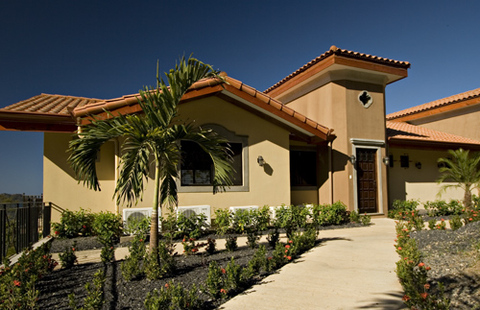
September 16th, 2013 (InsideCostaRica.com) The public Ombudsman’s office, known locally as the Defensoría de los Habitantes is urging the Treasury tax authorities to improve tax collection on luxury homes.
The tax on luxury homes, known as the “solidarity tax” was created in 2008 to finance housing for those living in poverty.
The Defensoría said that Treasury (Hacienda) is faced with several weaknesses in the collection of the tax. Tax collectors are currently collecting only about one-quarter of expected revenues from the tax.
The Defensoría points to the fact that tax collection is based on an affidavit made by the taxpayers themselves, who are also responsible for estimating their own properties’ values, which leaves open the possibility of taxpayers declaring a value lower than that established by the criteria of the tax code.
The office also believes that the significant reduction in the amount of fines for those who fail to file the tax are to blame for low collection rates. The Solidarity Tax originally imposed a fine of ten times the amount of tax owed for those who failed to file and pay the tax, but a reform in place since 2011 has lowered the fine to 50% of a base salary.
In addition, though Hacienda began a pilot program of field inspections in an attempt to identify properties that are out of compliance, the program has so far only been implemented in the canton of Belen.
Defensoría emphasized the importance of a establishing a coordinated strategy within municipalities and cantons where residents with higher income levels reside in order to obtain information necessary for more and effective and widespread tax enforcement, as well as to publicly denounce and expose tax evaders.
“Only a united society can create the conditions for an improvement in income distribution, and from this, further progress in the realization of human rights of the weaker [sectors of society], which involves thousands of families who do not have adequate housing,” said Defensoría, Ofelia Taitelbaum.
The Solidarity Tax applies to homes whose values exceed 117 million colones (about $234,000).
In calculating values, all construction, fit and finish, as well as electrical and plumbing systems are included. If this value exceeds 117 million colones, the home is considered a luxury home. After the construction cost is calculated, the value of the land is added, and the tax is finally calculated at a rate of 0.25% to 0.55% of the total estimated value, based on a sliding scale.

ATTENTION: If you are seeing this message,
- roberto
- disgusted

