


How to survive a heart attack when alone
A heart attack can be scary; even scarier if you don’t know the warning symptoms.
Prompt medical treatment is necessary during a heart attack to prevent damage to the heart muscle and death, but what do you if no one is there to help? How do you survive a heart attack when alone?
What is a heart attack?
To survive a heart attack when you’re alone, you must first understand what happens during this event.
According to the Mayo Clinic, a heart attack, also known as a myocardial infarction, usually occurs when a blood clot blocks the flow of blood through a coronary artery. Coronary arteries lead into the heart, and an interruption of blood flow can damage the heart muscle or result in death.
Warning signs are usually mild, and some people may attribute them to other health conditions. Because of this, the average person waits approximately 3 hours before seeking medical attention for a heart attack.
Symptoms include:
- Pressure or tightness in the chest
- Fatigue
- Shortness of breath
- Sweating or a cold sweat
- Abdominal pain
- Feeling of heartburn
- Dizziness
- Lightheadedness
- Cardiac arrest
- Nausea
- Irregular pulse
- Discomfort in the back, neck, or jaw
It is important to know that heart attacks can occur without any symptoms, and if warning signs do appear, they can often be different for men and women.
What do you do to survive a heart attack when alone?
To learn how to survive a heart attack, first it is important to dispel the myth associated with first-aid associated with a heart attack. According to Rochester General, a mass email has been circulating on the Internet for a number of years, indicating an individual suffering from a heart attack can cough in repetition to prevent death. This email was said to have originated from Rochester General, but this is not the case.
“We can find no record that an article even resembling this was produced by Rochester General Hospital within the last 20 years. Furthermore, the medical information listed in the article can not be verified by current medical literature and is in no way condoned by this hospital’s medical staff,” said the health care organization in a statement.
So if coughing doesn’t help, just what are you supposed to do? Do not wait.
“Many deaths could be prevented by acting quickly and getting treatment right away,” Dr. Robert Frankel, Director of Interventional Cardiology, said in a Maimonides Medical Center report. “A person will commonly feel pressure or heaviness in their chest, which can travel to their shoulder, left arm or neck.”
According to Frankel, the most important thing an individual can do to survive a heart attack when alone is to recognize the symptoms. The goal is to get to an emergency medical center where the artery can be unblocked in under 90 minutes. Research shows calling an ambulance is more effective than driving to a hospital by yourself.
Once the emergency response team has been called—or even before that time—individuals waiting at home should take between 162 and 325 mg of aspirin.
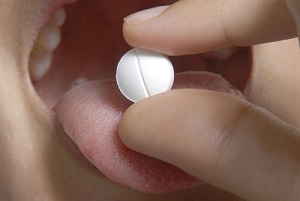
Individuals who suspect a heart attack should chew (not swallow) one tablet of 325 mg aspirin. (Shutterstock)
Why aspirin? The Harvard Medical School indicates aspirin in the event of a heart attack is critical because clots within the arteries continue to grow with every passing minute. Aspiring inhibits platelets from sticking to one another, thus preventing the blot clot from worsening.
Current recommendations indicate an individual have the best chance of surviving a heart attack when alone if they chew the aspirin before swallowing rather than downing the pills whole. Research suggests chewed aspirin needs only 5 minutes to reduce platelet activation by 50 percent and by 14 minutes, maximum platelet inhibition is achieved.
If swallowed whole, aspirin tablets will still work; however they take up to 12 minutes to reach 50 percent efficacy and 26 minutes for full platelet effect.
Don’t have aspirin tablets? Individuals can also take Alka-Seltzer tablets with 4 ounces of water. According to a study by Harvard Medical School, Alka-Seltzer takes 8 minutes to affect platelets by 50 percent and 16 minutes for full efficacy. This product contains aspirin, citric acid and sodium bicarbonate, making it effective in a heart attack situation.
Harvard Medical School indicates for optimal results during a heart attack, one tablet of 325 mg aspirin should be chewed as quickly as possible. Coated tablets should be avoided; the coating will significantly slow the rate of absorption into the body, even when chewed.
If you are alone and have had a history of heart issues, you may have another important medication already on hand. This medication, states the Mayo Clinic, is nitroglycerin. If you suspect you are having a heart attack, you should take your nitroglycerine immediately, as directed. Never take someone else’s nitroglycerin as this could cause serious complications.
Ultimately, recognizing the symptoms, calling immediately for help and taking aspirin or nitroglycerine quickly are the best ways to survive a heart attack when alone.
While there is no guarantee of survival, these tips provide the best chance for obtaining medical intervention in time.
Originally published by Saludify as “How to survive a heart attack when alone”
http://saludify.com/survive-a-heart-attack-when-alone/

ATTENTION: If you are seeing this message,

