


UN projects world population will hit 9.6 billion by 2050
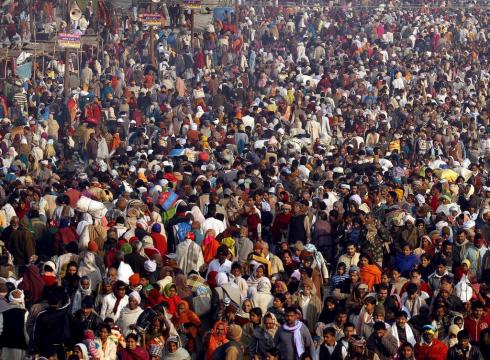
Archive image.
By Faine Greenwood / GlobalPost
The population of the planet is expected to reach 9.6 billion by 2050 according to a new UN report — a slightly larger number than anticipated, as fertility projections have been pushed upward in nations where women have the most children.
More than half of this projected demographic growth will be in Africa, which continues to add people even as population growth in the world at large slows down.
“Although population growth has slowed for the world as a whole, this report reminds us that some developing countries, especially in Africa, are still growing rapidly,” said Under-Secretary-General for Economic and Social Affairs, Wu Hongbo, in the UN report.
The “World Population Prospects: the 2012 Revision” notes that the population in the developed regions of the world should remain stable at around 1.3 billion until 2050 due to trends of low fertility, while the world’s 49 least developed countries are projected to double in populationsize in their stead.
Fertility rates in some areas, such as sub-Saharan Africa, had to be adjusted upwards by demographers.”In some cases, the actual level of fertility appears to have risen in recent years; in other cases, the previous estimate was too low,” said Director of the Population Division in the UN’s Department of Economic and Social Affairs John Wilmoth, in the UN press release.
India is expected to pass the Chinese population by around 2028 to become the planet’s biggest country population-wise, while Nigeria is expected to edge out the US sometime prior to 2050. The European population is expected to decline by around 14 percent.
The new figures don’t mean that world population growth has started to speed up again. As countries industralize, they tend to undergo “demographic transition,” wherein high death and birth rates are slowly replaced with low birth and death rates. It’s a demographic shift often helped along by an increase in rights for women.
Some experts suspect that the world population will plateau around 2060, and there’s a possibility that — after a transitional period of a higher death than birth rate— world birth and death rates could actually even out, keeping the human population stable.
(c) GlobalPost. This story is published under a special syndication agreement with Inside Costa Rica, and may not be reproduced without the express written consent of GlobalPost.

ATTENTION: If you are seeing this message,

