


New Monkey, Glow-in-Dark Roach, World’s Smallest Frog Among Top New Species
Faith Lapidus for VOA
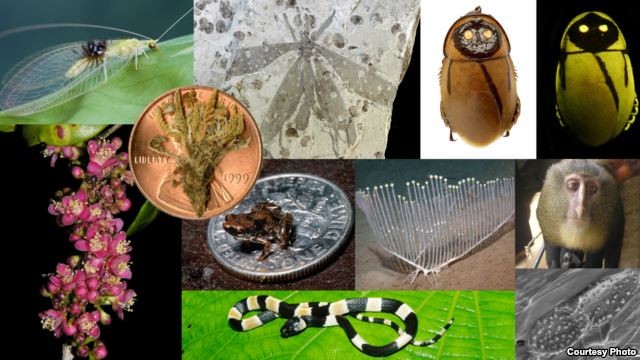
A cockroach that glows in the dark, a black fungus that’s ruining prehistoric cave art and a frog smaller than a child’s fingernail. These are three in a top-ten list of newly discovered species for 2012. An international committee of taxonomists announced their annual picks this week.
Committee chairman Antonio Valdecasas, a Spanish biologist and research zoologist, says the committee looks for organisms with “unexpected features or size, and those found in rare or difficult-to-reach habitats.” Committee members also weigh the species’ significance to humans. This is the sixth year the International Institute for Species Exploration at Arizona State University has selected the Top Ten New Species.
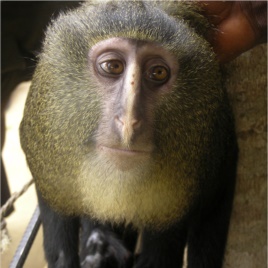
A new species of monkey found in the Democratic Republic of the Congo and identified as Lesula (Cercopithecus lomamiensis) is seen in this undated photograph from an article published September 12, 2012, in the science journal PLOS One.
Also on this year’s list are a tiny violet, a harp-shaped carnivorous sponge, the lesula monkey, a snail-eating snake and a flowering shrub from the endangered Madagascar forest. The committee also included an extinct hangingfly identified in a 165 million-year-old fossil, and a lacewing identified from an image a photographer shared on the Internet.
An average of 18,000 plant and animal species are discovered each year, but scientists have identified only about 2 million of the earth’s 10-12 million living species – and that’s not counting most of the teeming microbial world. Quentin Wheeler, founding director of the Institute, called for “a NASA-like mission to discover 10 million species in the next 50 years.” He said such an achievement could provide important new evidence about the origins of life on Earth, and new insights into how humans can live more sustainably on the planet.

ATTENTION: If you are seeing this message,

