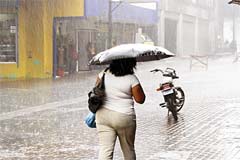
"Aguacero, Granizada y
Nube Negra"
It was only 4pm, but the
skies were dark as if it
were 6pm, as the Central
Valley was inundated
with a heavy rain storm
that flooded many areas
and blanketed others
white with "granizo"
(hail).
The dark afternoon sky
over San José was caused
by Cumulonimbus clouds,
a type of cloud that is
tall, dense, and
involved in
thunderstorms and other
intense weather. It is a
result of atmospheric
instability. These
clouds can form alone,
in clusters, or along a
cold front in a squall
line. Cumulonimbus
clouds form from cumulus
clouds (namely from
cumulus congestus) and
can further develop into
a supercell, a severe
thunderstorm with
special features.
The phenomenum surprised
Josefinos, especially in
the downtown core, where
many fled for cover as
the early afternoon
sunshine turned
ominously.
Juan Diego Naranjo, of
the Instituto
Meteorológico Nacional (IMN)
- national weather
service - explained that
the hot morning and low
cloud cover caused the
formation of the
Cumulonimbus clouds.
In many places like San
Pedro and Tibás, the
downpour was fierce that
storm sewers could not
handle the volume of
water that fell in such
a short time, flooding
many streets and nearby
homes. In downtown San
José, one parking lot
turned white for several
minutes, before the hail
stones melted away.
According to Naranjo the
moring temperature in
San José reached a high
of 29.7 celsius (85.46
fahrenheit), one of the
hottest days in the
nation's capital.
If one didn't look at
time, one could swear
that it was already
nightfall, which usually
occurs by 6pm, when in
fact it was only minutes
after 4pm.
|