|
Health Officials Maintain Red Alert For "Exotic"
Products
Costa Rican health officials are maintaining a
red alert following the discovery of toxic
Chinese products in the Costa Rican market.
The Ministerio de Salud (ministry of Health) is
asking consumers to be extremely careful when
purchasing "exotic" products, not wanting to
target their comments or their alarm
specifically to Chinese products.
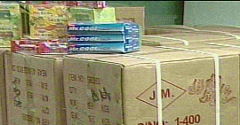
The alert stems from the discovery of toxic
toothpaste being sold in Costa Rica under the
brand name "Mr. Cool" and "Genial".
Fears are that the toxic toothpaste is being
also sold under other brand names and Health
officials are asking consumers to closely look
at products labels closely.
The toxic toothpaste contains diethylene glycol,
a chemical used in radiator coolants and
attributed to the cause of 56 deaths in Panama
when it was found in cough medicine in the last
several months. The tainted toothpaste was also
found in Nicaragua stores during this week,
prompting Health officials from that country to
take similar actions.
The ministra de Salud, María Luisa Ávila,
explained that the toxic toothpaste came into
Costa Rica illegally, masked in boxes of
toothbrushes that do not required a health
permit for entry.
Avila said that consumers should be aware that
toothpaste sold in Costa Rican stores should
have the health department registration number.
If a product does not have the registration
number on its packaging it has not been approved
for sale in Costa Rica, minister Avila assured.
The Health minister also is asking consumers to
be extremely careful when purchasing stuffed
animal toys from China and the presence of "pufferfish"
in Tilapia imported from China.
Avila said that the stuffed animals may be
contaminated with a harmful bacteria. In the
case of the Tilapia, the minister said they are
responding to an alert in the U.S. after several
cases of intoxication where reported. Avila said
that if the imported Tilapia has swollen a
pufferfish, if cut wrong can release a toxic
venum contained in the pufferfish that can
result in death if eaten.
Months back the Asociación de Consumidores
(consumer association) and the office of Defensa
del Consumidor (government agency protecting
consumers) found a number of Chinese products
without the Spanish translation on its labels.
All consumable products must include, in
Spanish, the contents of the product and the
expiry date, along with the Ministry of Health
registration number. Importers of consumer goods
have to add the label to each product if it does
not contain the Spanish translation, before it
can be sold in Costa Rican stores.
|
|