|
Casa Alianza
Director Bruce Harris "Fired"
Over Sex Scandal!
Bruce Harris, the
regional director of Casa
Alianza, a Covenant House
program that is Central
America's most important
children's rights organization,
has been fired because of a
relationship with a boy the
organization had once helped.
Harris, "recently paid for
sexual favors from a 19-year-old
Honduran youth" who had been a
resident of the organization's
shelter until near the end of
2002, according to a statement
released Friday by Covenant
House, Casa Alianza's parent
organization.
>>>
complete
story
Fischel Board President Knew of
the Payments
Emilio Bruce,
president of the board of
directors of the Corporación
Fischel, together with the
president of the corporation,
Walter Reiche Fischel, paid out
the 20% in commissions with
respect to the Finnish loan for
the purchase of medical
equipment at the Caja
Costarricense de Seguro Social (CCSS).
A report by the daily Spanish
newspaper, La Nación, says it
has a copy of signed letter by
Bruce and Reiche, instructing
the Finnish to pay a commission
to Inversiones Oscol S. A, a
Panamanian registered company.
The letter, signed by both men,
reveals that since September
2000, Bruce knew of the Finnish
consortium, Instrumentarium
Medko Medical, would pay a
percentage of the loan that
would never reach the
Corporación Fischel.
Bruce admitted to the newspaper
of having signed the document,
but holds firm that he didn't
know then and doesn't know now
who are the principals of the
Panamanian corporation.
He said that from the beginning,
the deal with Finland would be
managed outside of the
Corporación Fischel and be
handled through a Panamanian
entity and was approved by the
Fischel board of directors, of
which he is president.
The 20% represents some $8.8
Million Dollars.
Meanwhile, more payments are
being discovered almost daily.
Yesterday, it was found that two
other directors of the Sultana
corporation in Panama,
controlled by former Costa Rican
president, Rafael Ángel Calderón,
also received monies from
Finnish deal, in the amount of
$105.000.
The money was received by the
International Development and
Outsorcing Corporation, a
Panamanian corporation, La
Nación, reports.
Ovidio Castro Jiménez, and Daisy
Arquiñez González, both
Panamanian are registered as
President and Secretary of
Outsourcing.
The Ministerio Público who has
been slow in following the money
trail has now asked a judge to
order a "freeze" on the bank
accounts of those being
investigated in the scandal.
Ana Lorena Brenes, Procuradora
General de la República
(Attorney General) confirmed the
request.
Brenes added that her office has
made a full investigation of
properties and vehicles
registered by those being
investigated and is firm that
any attempt to transfer those
assets will be dealt with
severely under the current laws.
Any transfer of the current
assets will be dealt with as
fraud.
Although Brenes refused to
comment, as well as the
prosecutor Walter Molina, on the
details of their request and the
names of those whose bank
accounts they are attempting to
freeze, the indication is that
seven or eight people are
involved.
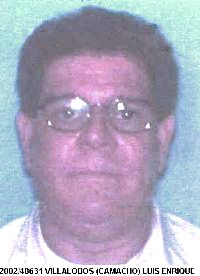
Osvaldo Villalobos Charged
Almost two
years following the start of the
investigation, the Ministerio
Público, yesterday presented
formal charges against Osvaldo
Villalobos Camacho, for
suspected fraud against dozens
of investors who made deposits
with the company Ofinter.
The press office of the Poder
Judicial confirmed the charges
and that all parties to the case
have been notified.
Villalobos has been in
preventive detention for almost
two years, since November 2002,
waiting the outcome of the
investigation, that has been
long in coming.
Late last year, Villalobos was
allowed to serve his preventive
detention under house arrest,
but brought back to jail in
February of this year, that is
to expire on September 27.
Under normal circumstances,
prisión preventiva (preventive
detention), can be up to 18
months, at which time the
prosecutor can carry out his
investigation and then has to
either file formal charges of
release the suspect. In
"difficult" cases, the prisión
preventiva can be extended up to
24 months, as in the Villalobos
case.
According to the Poder Judicial,
Villalobos will be tried for "delitos
de estafa, intermediación
financiera ilegal, autorización
de actos indebidos y
legitimación de capitales
(fraud, illegal financial
intermediation, authorization of
illegal acts and money
laundering).
Authorities are still continuing
their investigation of Osvaldo's
brother, Luis Enrique Villalobos
Camacho, who has international
order for his capture against
him.
The whereabouts of Enrique have
been the subject of speculation
from the day of his
disappearance.
The Villalobos - known as the
"Brothers" - along with the firm
Ofinter, whose is based in San
José, are alleged to have
defrauded more than 6.000
investors of more than $100
Million Dollars.
The Brothers operation closed in
July of 2002 following an
investigation by authorities
into money laundering.
White House
Drops Costa Rica from Coalition
List
The White House
removed Costa Rica from its
Internet list of Iraq coalition
members on Friday after the
Central American nation asked to
be excluded from the roster of
countries that support U.S.
policy in Iraq.
The San José government told
U.S. officials last week that it
wanted out of the Bush
administration's so-called
"coalition of the willing"
because of domestic pressures in
Costa Rica, where the war is
unpopular.
Costa Rican officials
specifically asked the White
House to drop its name from a
coalition list posted on the Web
site,
www.whitehouse.gov.
But the list remained unchanged
for more than a week.
"We took the concerns of the
Costa Rican people with the
utmost seriousness and removed
their name from our Web site. We
did it as fast as possible," a
senior administration official
said.
Costa Rica, which abolished its
army in 1949, did not provide
troops or aid for the Iraq
occupation.
Most Central American nations
backed the U.S.-led invasion and
Nicaragua, Honduras and El
Salvador sent troops.
But Honduras and Nicaragua later
halted their military
involvement and only El Salvador
still has troops in Iraq. It
sent a new contingent of 380
soldiers last month, despite
threats of retaliation by
Islamic militant groups.
"My opinion is always that we
should support a country that is
our friend," Costa Rican
president Abel Pacheco said.
"But Costa Rica is a democratic
nation, directed by independent
powers. We are a pacifist
country, but against
dictatorships," he said of the
regime of Saddam Hussein.
Pacheco spoke before a dinner in
his honour hosted by the Central
America-U.S. Chamber of Commerce
in Coconut Grove, Florida.
The event may have offered
Pacheco a welcome respite from
the stormy political scene at
home. Even as the president
boarded his flight to the United
States, his team of newly
appointed financial advisers
were settling into offices
abandoned by three economic
ministers who walked off the job
earlier this month.
Rodríguez to
Restructure the OAS
The new
secretary-general of the
Organization of American States,
former Costa Rican president,
Miguel Angel Rodríguez,
intends to streamline the
bureaucracy in a major
restructuring that he hopes will
reverse a budget deficit
estimated at $5 million next
year.
Rodríguez, announced his
plans as he assumed office this
week, replacing Cesar Gaviria.
Rodríguez said his
reorganization will save more
than $2 million per year. The
OAS faces a $1 million budget
shortfall this year. Rodriguez
said his belt-tightening moves
will have no effect on the OAS
goals of promoting "the highest
ideals of peace, justice,
freedom and prosperity for the
Americas."
"We have a great responsibility
to the peoples of this
hemisphere, and we must not let
them down," he said.
He plans to create seven
directors to promote human
rights, democracy, development
and security and to provide
administrative, communications
and legal services for the
Washington headquarters and
regional offices.
Rodríguez said he will
consolidate some functions. For
example, the human-rights
coordinator will provide
administrative and political
support for the secretariats of
the Inter-American Commission on
Human Rights, the Inter-American
Court of Human Rights, the
Inter-American Children's
Institute and the Inter-American
Commission of Women.
The OAS, which represents 35
active-member states, bid
farewell last week to Mr.
Gaviria, who served as
secretary-general for 10 years.
OAS ambassadors praised him for
reinvigorating the organization
and for developing the
Inter-American Democratic
Charter.
Mr. Gaviria "took on risks in
trying to bring about positive
change in our hemisphere," said
Ecuadorean Ambassador Marcelo
Hervas.
|