Grandma Drug Gang Busted
At
first look, the four
grandmothers, ages 83, 75, 59
and 52 who nothing more than
neighbourhood women enjoying
their later years in life.
However, the truth was anything
but.
The grandmothers ran their
"drug" shop in Cañada II de San
Sebastián. Two of the
grandmothers have a history in
the drug trade, having served
time in jail for trafficking.
The Policía de Control de Drogas
(PCD) arrested the women in an
early morning raid.
The four women identified only
by their last names, Fonseca
Fonseca, 83; Solano Madrigal,
52; Ledesma Fonseca, 59 and
Navarro Araya, 75. Arrested in
the raid also was a 21 year old
man, Dávila Alvarado, who is
suspected of working for the
gang.
According to the police report,
the suspected were found to have
in their possession 28 "hits" of
cocaine, 129 "piedras" or rock
cocaine, along with 437.600
colones in cash.
Rogelio Ramos, Minister of
Security, said in a press
statement that "we are all equal
under the law, there is no
difference in the sexes of the
ages. Our fight against the drug
trade is important and we ask
the help of all citizens to
denounce the sale of drugs and
to work with police."
According to Ramos, the women
are the "oldest" detained in the
history of the PCD. The women
lived together for some years,
in humble surroundings and sold
drugs - "las piedras" at all
hours of the day or night.
The PCD say that the arrest of
the four women yesterday brings
the total this year to 310
persons tied to drugs, of which
81 are women and 220 are men. Of
the 310, 74 are foreigners.
Police admit that the arrest of
the four grandmothers came as a
result of an "anonymous" tips,
probably from neighbours who are
tired of seeing drug buys in
their area at all hours of the
day and night, as the
grandmothers business was a hot
spot for many people coming and
going at all hours.
The four women will spend some
time in the women's jail, El
Buen Pastor, in Desamparados as
the the authorities prepare
their case to bring to trial.
Fake Doc Says He Won't Leave
Voluntarily
The quack
cosmetic surgeon who allegedly
murdered a Manhattan woman
seeking treatment for a hairy
tongue insists he will never
willingly return from Costa
Rica.
Dean Faiello, the quack cosmetic
surgeon who is alleged to have
murdered a Manhattan woman
seeking treatment for a hairy
tongue insists he will never
leave Costa Rica voluntarily>
Faiello, who remains in a Costa
Rican jail six months after he
was detained by immigration
officials at oceanside resort in
Guanacaste. Immigration
officials handed Faiello over to
judicial officials who have
begun the extradition process at
the request of New York
prosecutors.
Faiello told the CBS show "48
Hours Mystery" that he is
HIV-positive, has lost 22 pounds
in captivity and sees his health
worsening.
"It's no secret I'm
HIV-positive," he told the show.
"I've been here for six months
without any treatment, any
medical treatment of my HIV
condition.
"I like Costa Rica and I'm doing
everything that I can with my
attorney and my legal powers to
stay here in this country," he
said. "I wish to spend the rest
of my life here in Costa Rica."
When asked about killing
financial analyst Maria Cruz's,
Faiello insisted he had nothing
to do with the 35-year-old
woman's death.
In April 2003, Cruz went to a
bogus clinic Faiello set up in a
friend's E. 16th St. apartment
to get laser surgery to remove
hair from her tongue, according
to authorities.
Detectives believe she went into
convulsions after Faiello
injected her tongue with an
anesthetic.
Cruz's corpse was found in
February buried inside a cement
tomb in Faiello's former home in
Newark - 10 months after she
vanished.
Posters of Cruz had been hung
all over the city, and her
disappearance was a mystery
until Faiello's former lover,
Greg Bach, tipped authorities to
the phony doctor's home.
"I am innocent of the charges
presented against me," Faiello
told the show. "I have been
falsely accused by the U.S."
Human Rights Court to Begin
Deliberations on Berenson Case
The Inter-American
Human Rights Court, based in San
José, said Thursday it will soon
begin deliberations in the case
of Lori Berenson, the
34-year-old New Yorker jailed
since 1995 in Peru for
collaborating with Marxist
guerrillas.
The court will deliberate the
case between Nov. 15-25,
deciding whether Berenson
received a fair civilian retrial
in 2001.
Berenson was arrested in 1995,
and convicted by hooded military
judges who denied her a chance
to present evidence or
cross-examine witnesses. She was
sentenced to life without
parole.
Her 2001 retrial came after
intense U.S. pressure. She was
convicted of the lesser charge
of terrorist collaboration and
sentenced to 20 years in prison,
including time served.
But Berenson's defense team, led
by former U.S. Attorney General
Ramsey Clark, argued her retrial
was still based on Fujimori's
draconian anti-terrorism laws
and failed to meet international
standards for due process.
She was improperly tried twice
for the same crime, Clark said,
and faced hostile judges who
relied on coerced testimony and
tainted evidence from the
earlier military trial. Berenson
has denied any wrongdoing.
The Inter-American Human Rights
Court is an independent arm of
the Organization of American
States.
No Internet Saturday Night to
Sunday Noon
Radiografica Costarricense S.A.
(RACSA) says it will pull the
plug on internet service between
11pm Saturday night and 12 noon
on Sunday, to make changes to
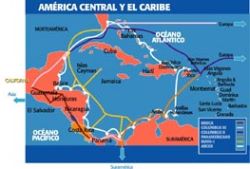
the MAYA underwater cable, one
of two cables that connects
Costa Rica to the rest of the
world.
|
|
RACSA's The director of
network and systems, Henry
Fuentes, says the disconnection
is necessary to complete work on
the MAYA that connects to Miami,
Florida. The cable is accessed
in Costa Rica in Límon.
Fuentes explained that the work
consists of moving the cable
closer to the roadway. The cable
now runs along the beach and due
to changes and deformities of
the beach line it will be best
to bring it in closer.
MAYA is not the only internet
connection. RACSA also connects
to the ARCOS cable, which
automatically takes over with
any problems on the MAYA cable,
but Fuentes says it will not be
able to handle all the traffic.
RACSA has more than one million
internet customers and says that
there will be definite slowdown
to no service once the MAYA
cable goes offline. The ARCOS
internet pipeline cannot handle
all of the traffic and service
will practically come to a stand
still.
The Instituto Costarricense de
Electricidad (ICE) customers
will also be affected, as ICE
also connects to the MAYA and
ARCOS cables The connection to
an underwater cable in the
Pacific is coming sometime next
year.
Poverty on the Rise
According to experts,
poverty worsened in Costa Rica
this year, as compared to 2003.
Last year, for the first time
since 1994, poverty dropped
below 20 percent, to 18.5
percent, which means almost
169,000 families out of 910,000.
However, this year it can
increase to 21 percent,
according to the State of the
Nation Report, and University of
Costa Rica professor Pablo Sauma
forecasts 21.5 percent.
Analysts agree that the cost of
goods and services has steadily
risen this year; therefore, more
families did not have enough
income to meet their needs.
One of the factors that
contributed to the reduction of
poverty in 2003 was that the
average income of the poor
increased by 10 percent, while
the cost of the basic needs rose
6.7 percent.
This year, the so-called basic
basket has gone 16 percent up,
and analysts find that it is
just impossible for income to
grow at the same rate; thus, the
rise in poverty.
|
|
|
In the
market for a change? Click
here! |
Perfect Blend
The production of coffee has
become a tourist attraction,
and the so-called "coffee
tours" - which include
visiting coffee plantations
and observing the different
parts of the process - are
taken by thousands of
foreign visitors.
At a time when the price of
coffee has markedly dropped
in the international market,
the blend of production and
tourism has resulted in
much-needed income for
coffee growers in Costa
Rica.
US Firms Settle Here
Before the end of
the year, another six US
companies will establish
venues in Costa Rica. Their
initial investment is some
$1.8 million, and they will
generate 200 new jobs.
Four of the companies
operate call centers -Van Ru
Credit Corp., Traxtech Latin
America, Via Information
Tools, and Avyonyx-, while
Merlin VME produces
software, and Smith Sterling
manufactures dental
supplies.
According to the Costa Rican
Coalition for Development
Initiatives - who sponsored
the arrival of those firms
-, these companies will
generate another 600 new
jobs in the next few years.
|
|


