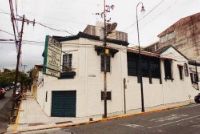
Banco Elca Closed
A series of anomalies in the operation of Banco Elca was detected
by the Consejo Nacional de Supervisión del Sistema Financiero (CONASSIF),
which Tuesday ordered an intervention into the operations of the private
bank.
CONASSIF, in a press release, affirms their suspicions that
placed the bank in a high risk position, placing the security of
depositors in danger and possibly that the bank is insolvent.
The Superintendencia General de Entidades Financieras (SUGEF) also
affirms that it detected evidence of lack of transparency on the
bank's transactions that clouded the real financial position of the
bank and thus ordered the closing of the bank.
Tuesday, the main offices of Banco Elca on Avendida 8, near La
Sabana, was closed so were it's branches and it's online website
banking operations.
Among some of the problems the bank showed was it's inability to
recover loans, extending periods to repay loans and growing amount
of late payments that it was unable to collect.
In addition, it was disclosed that there were some anomalies with
credit operations related to the bank's president, Carlos Alvarado
Moya.
These and other undisclosed problems placed the bank in a financial
crisis and the SUGEF decided to step in, taking control of the bank.
The government body suspended the duties of the board of the
directors and the managers of the bank and appointed Manrique López
and Roy Araya to provisionally for a period of 90 days. The
directors have 30 days to determine if there is the possibility to
save the bank or ask a judge to order it's winding up.
Banco Elca is a private bank with five branches and 155 employees.
Recently the bank had disposed of it's bonds and stock exchange, as
well as it's insurance portfolio. In 2003, the bank received an
injection of capital from a Venezuelan group, which acquired 50%
control of the bank.
Insidecostarica tried to reach Carlos Alvarado, president of the
bank, however, he was not available.
New
Comptroller Asked to Resign
A group of 38 Legislative Deputies have banded together
and calling for the resignation of the newly appointed Comptroller
Álex Solís.
A motion was prepared and signed by the 38 deputies, affirming that
Solís had lost his political backing. The motion calls for Solís to
resign with 24 hours of it's approval by the Legislative Assembly.
The motion was presented yesterday afternoon and could be voted on
as early as today.
Solís was quoted last night as saying he will not resign.
If Solís decides to ignore the results of a motion calling for his
resignation, the deputies have assured that they will seek other
remedies to have the Solís removed as Comptroller of the Republic.
Solís has been under investigation for the past month when it was
discovered that he falsified his brother's signature, presidential
candidate in the last election, Otton Solís, to a legal document and
the revelation in the past week of Solís's role in providing high
interest loans to persons who desired to enter the United States
illegally.
Earthquakes Shake the Pacific Coast
Two earthquakes shook the Pacific coast yesterday,
according to the Red Sismológica Nacional (RSN).
The first quake registered 6.1 on the Richter scale occurred at
1:01am some 75 kilometers west of Bahía Brasilito, in Guanacaste and
slightly felt in San José.
The other shake barely reached 4.2 on the Richter scale occurring 12
kilometers south of Ciudad Cortés at 4:12am, which was felt in
Golfito and most of the southern region.
Former director of the General de Aviación Civil, Nelson Rodríguez,
was sentenced to 210 years in jail. This is in addition to time he
is already serving on a unrelated case.
210
Year Sentence for Corruption
Rodríguez is one ten people who were accused of
irregularities in using airline tickets. Managers at the Aviación
Civil have access to a certain number of airline tickets at various
airlines.
The accusation was based on the facts uncovered that the airlines
tickets were used for non-official Aviación business and for
personal use.
Three others of the total accused also received prison sentences -
Francisco Nicolás, who received 3 years; Freddy Badilla got 6 years;
and, Jorge Arguedas was ordered to 4 years of time.
Rodríguez who got the stiff sentence of 210 years will in actuality
only have to serve 9 years, according to court records.
The prosecutor's office was pleased with the sentences handed down,
saying that this should serve as and example to other public
functionaries who take benefit of what is not due to them.
Controller's Strike
Still Going Strong
The air traffic controller's strike continues with
neither side giving way to any further negotiations.
The government is waiting on the courts declare the strike illegal
and order the controller's back to work, while the controller's
unions is staying firm on it's position to pay equity that is part
of a contract the controller's have with the government signed back
in 1994.
The controller's maintain that while the controls are in the hands
of foreign controller's, air safety is being comprimised and
passengers are being put in danger. Minister of Transports, Javier
Chaves, denies that is the case.
The strike is now into day 5. The controllers walked off the job
last Saturday morning at 6:00am.
Priests Said to Cross Borders to Escape Abuse Charges
By National Catholic Reporter
A yearlong investigation into 200 cases of sexual abuse of minors by
Catholic clergy by The Dallas Morning News found that nearly half
involved clergy that tried to elude law enforcement by crossing
international borders, often with assistance from their superiors,
and many of these remained in active ministry.
“About 30 remain free in one country while facing ongoing criminal
inquiries, arrest warrants or convictions in another,” the Dallas
paper said in the introduction to a multipart series of articles
that began running June 20.
“Most runaway priests remain in the church, the world’s largest
organization, so they should be easier to locate than other
fugitives.
“Instead, Catholic leaders have used international transfers to
thwart justice, a practice that poses far greater challenges to law
enforcement than the domestic moves exposed in the 2002 scandal,”
the introduction said.
Each day between June 20 and June 23, The News carried front-page
stories with extensive details of four cases.
Fr. Enrique Vásquez fled his native Costa Rica in 1998 the day
before charges of abusing a 10-year-old altar boy were brought
against him. He went on to work in the New York archdiocese and
traveled extensively in the United States for Hispanic ministry
assignments. He fled again to Mexico in 2002 and later to Honduras.
The News accused Cardinal Oscar Rodríguez of Honduras, a Salesian
who is widely considered a candidate for pope, of sheltering Vásquez.
From their world headquarters in Rome, the Salesians posted a
statement on their Web site denouncing the news reports, saying the
order “categorically denies such behavior and condemns every kind of
abuse of minors.”
Rodríquez also did not respond to written questions, and according
to his chancellor, Fr. Juan López, was too busy to be interviewed.
López initially told The News that Vásquez had never worked in the
archdiocese but later said he might have seen the priest at a clergy
meeting.
Vásquez’s bishop in Costa Rica, Angel San Casimiro, said he did not
know how the priest got a ministry job in Honduras. Church officials
there did not check with him, San Casimiro said.
In 2002 while the FBI was searching for Vásquez at the request of
Costa Rican prosecutors, San Casimiro never told anyone that the
priest was traveling in the United States and Mexico because, he
said, no one asked him.
Another commonality across the stories was the pressure put on
victims and their families. When Flory Salazar reported the abuse of
her 10-year-old son to San Casimiro, she said he implored her not to
go to the police. She said neighbors criticized her for denouncing a
priest.
 News
Briefs News
Briefs
-
President Abel Pacheco and transport
viceminister Lorena López, confirmed on Tuesday that the country is ready to
receive port certification, known as the SOLAS international agreement. “The
decree which establishes security regulations was already published and that
positions Costa Rica next to other countries undergoing certification
process.”
- A computer virus placed the records of the Registro Nacional
in jeopardy this past week, slowing down the producing of records
and other functions at the Registro, was disclosed yesterday.
Computer technicians took some 3 days to remove the virus.
|