Intel's New 32 NM Chips To Be Manufactured
In Costa Rica
The Intel plant in Costa Rica will be
manufacturing and testing the new 32 NM (nanometre)
microprocessor chips, the first of its kind
in the world. The chips are among 10 new
chipsets, 25 new processors, 802.11n WiFi
and Wimax products with new Intel My WiFi
features.
The 32 nanometer (32 nm) process is the next
step after the 45 nanometer process in CMOS
manufacturing and fabrication. 32 nm refers
to the expected average half-pitch of a
memory cell at this technology level.
The new CPUs, chipsets and chips providing
will be in computers covering 400 separate
designs.
All the new products are built using Intel's
next-generation 32-nanometer technology,
codenamed Westmere, and are based on the
Nehalem microarchitecture. The brands are
Core i3 for low-end systems, Core i5 for
mainstream PCs and Core i7 for the highest
end computers used in video editing and
playing top-of-the line video games. Intel
started shipping 32-nanometer processors
this year, but the upcoming products are the
first to cover all PC categories.
The Core i7 processors, codenamed Lynnfield
for the desktop models and Clarksfield for
the laptop versions, are all quad-core
processors. The i5 processors are available
in quad-core and dual-core models, and the
i3 are only dual-core.
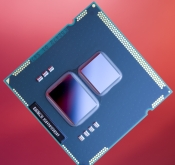
All of the dual-core processors have the CPU
and graphics processor integrated on a
single die, with the memory controller on a
separate chip. Previous generations had each
of the three components on a separate die.
The Core i7 products, which are typically
used in systems with a separate graphics
card, do not have integrated graphics, which
Intel now calls its HD (high-definition)
Graphics. Previously, Intel called its
graphics technology GMA for graphics media
accelerator.
Intel says its latest graphics technology is
better than the previous generation because
more of the work is done on the hardware
versus software. As a result, end users will
see smoother, sharper and more colorful
playback of Blu-ray video and DVDs. The same
is true for picture-in-picture playback,
according to Intel. |
|
|
 |
|
| |
|
|
|
|
|
|


