Costa Rica,
Chile, Uruguay Best Performers In Democratic
Development
Costa Rica, Chile and Uruguay have the
highest democratic development in Latin
America while Guatemala and Bolivia stand at
the opposite end of the ranking. The index
measures among other things respect for
political rights, civil liberties,
institutional quality and the capacity of
the different governments to deliver.
Started in 2002 by the German Christian
Democrats Foundation Konrad Adenauer and the
internet portal Polilat.com, the IDD index
has an annual edition which in 2009 shows a
slight overall advance (1%), over last year,
of the region’s commitment and involvement
with democracy.
However Bolivia, Brazil, Colombia, Costa
Rica, El Salvador, Guatemala, Honduras,
Nicaragua and Paraguay have remained
stagnant or fallen back while Argentina,
Chile, Ecuador, Mexico, Panama, Peru,
Dominican Republic, Uruguay and Venezuela
have advanced.
More over the IDD shows again “a great
disparity” in achievements with only 17% of
countries with a high performance; 28%
medium performance; and 55% in the lowest
scale.
Top of the list are Chile with 10 points
followed by Costa Rica with 9.66 and
Uruguay, 9.22. This group is followed by
Panama, 7.19; Mexico, 6.49; Argentina, 5.85
and Peru, 5.58, which are above the region’s
average of 5.23. The immediately below
ranked are Brazil, 4.51 and Colombia, 4.07.
Well below average figure, El Salvador,
3.49; Ecuador, 3.48; Guatemala, 3.28 and
Bolivia, 2.59 points.
In spite of being ranked among the lowest,
Ecuador was the country which most advanced
this year and El Salvador the one which most
fell back.
The report also points out that the quest
for democratic development in the region
these last twelve months has taken place in
a context of global crisis, which not only
“set doubts about the ethics and morals of
democratic progress, but has created serious
difficulties for the development of the
region and has deepened existing
inequalities”.
“The end of a cycle of bonanza is evidence
of the fall in some indicators and worrisome
its impact on unemployment and poverty which
could lead to a crisis in most of the Latin
American economy”, adds the document.
Furthermore the emergence of trade barriers
and market restrictions has begun “to
generate tensions” inside countries and
among neighbours, which accumulate new
serious challenges for the democratic
development of the region.
“The international crisis has again
questioned the Latin American leadership
about the urgency of solving persistent
institutional problems that are still
pending solutions”.
Finally the IDD report points to democratic
governance threats in the forms of pockets
of authoritarianism, populism and cronyism
which destroy the pillars on which democracy
is built.
|
|
|
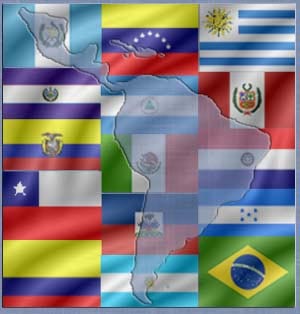
“Great disparity” remains between good and low performers says the IDD Lat report
|


