No Plans to Change CAFTA Labour Provisions
The Bush administration
has no plans to change labour provisions of a new
free trade pact with five Central American countries
to encourage more Democrats to vote for it, a U.S.
official said on Friday.
|
|
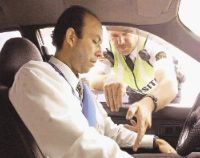
Drivers have a 15 day grace
period to use the seatbelt.
Transit officials will giving
out warning instead of fines
until May 20th. |
|
|
|
|
|
|
|
|
|
|
|
Price of Gasoline Going Up.
Again!
At Midnight tonight, another
increase in the price of
gasoline will hit the pocket
book. The new prices for a litre
of gasoline will be:
Super: ¢324.05
Regular: ¢290.85
Diesel: ¢215.50 |
|
|
"We believe that the approach that we've adopted in CAFTA
(U.S.-Central American Free Trade Agreement) is the approach that was agreed
upon by Congress" in 2002, Regina Vargo, assistant U.S. trade representative
for the Americas, told reporters after a speech to a business group.
Top Democrats have warned CAFTA is in trouble in Congress because of its
labor provisions, which they say are too weak. They want the agreement
renegotiated to require the five countries - Costa Rica, El Salvador,
Guatemala, Honduras and Nicaragua - to incorporate the International Labour
Organization's "core labour standards" into their laws.
Those include the right to collective bargaining and freedom of association
and the elimination of forced labour and discriminatory employment
practices.
But in a speech to the Association of American Chambers of Commerce in Latin
America, Vargo said the CAFTA labour provisions were consistent with
Congress' instructions that countries only be required to enforce their own
labour laws as a condition of becoming a U.S. free trade partner.
A recent ILO report found that enforcement, rather than the countries'
labour laws themselves, was the biggest problem the region faced in the
labour area, Vargo said. The United States has been engaged in "ongoing
dialogue" with the CAFTA countries aimed at improving their enforcement, she
added.
Bill Morley, a lobbyist for the U.S. Chamber of Commerce, acknowledged that
CAFTA supporters were far short of the votes they needed to win approval in
Congress.
However, it was still possible there could be a vote on the agreement before
the end of the year, if congressional leaders decide to come back after the
November elections to finish up legislative business, Morley said.
Vargo told reporters she still expected the U.S. government to sign the
agreement this year, even though the White House has not yet set a date for
that event.
A decision on when to submit the agreement to Congress is also up to the
White House, she said.
Vargo denied rumors the United States and the Central American countries
were making changes to CAFTA as part of a final legal scrutiny of the
agreement this week.
Costa Rican Among Scientists to Win Fellowship
A total of 10 scientists from eight countries India, Burkina Faso, Cameroon,
China, Ethiopia, Kenya and Costa Rica, have won a fellowship of the US-based
International Fund for Agricultural Research (IFAR), a foundation dedicated
to fostering scientific excellence in agriculture.
These scientists will spend up to three months working with world class
scientists at IFAR's Consultative Group on International Agricultural
Research (CGIAR)'s centres.
The fellowship winners developed innovative results-oriented proposals
together with their proposed host research centres, IPGRI, World
Agroforestry Centre/ICRAF, IITA ILRI and the Africa Rice Centre/WARDA.
The proposals, which were assessed by a team of international experts, cover
areas such as the development of rice lines for drought prone rice
production systems, modeling gene-flow to assess risk to biodiversity in
traditional cropping systems.
The Evaluation Committee included experts from India, Brazil, Cameroon and
New Zealand.
Nicaraguan Gang Will Try to Enter Costa Rica
Following the bloody massacre on Tuesday of four
police offices in the Caribbean city of Bluefields, Nicaragua, by a gang of
ten Nicaraguans, Costa Rican police along with Nicaraguan police forces are
maintaining an alert fort he men in the northern border region.
The men, armed with AK47 assault rifles, ambushed the four Nicaraguan police
officers, robbed them of their uniforms and then slit their throats.
The men are suspected to be headed for the San Juan river area that borders
with Costa Rica. The men, who are considered very dangerous and who among
them may include a man known as "Guatuso" who is wanted in Costa Rica for
planning the attempted kidnapping of a businessman in Upala (Costa Rica).
Police officials on both side of the border believe that the jungle, the
remote distance from the border points and the number of police officers,
both Costa Rican and Nicaraguan, will make it impossible for the gang to
enter Costa Rican territory.
Rogelio Ramos, Costa Rican Minister of Public Security, said that they will
maintain a vigilance for the men for as long as necessary.
Grace
Period For Drivers Without Seatbelt
The new seatbelt law came into effect yesterday following publication in the
official daily newspaper La Gaceta.
However, Transit police say they will waive the ¢8.350 colones fine until
the 20th of May.
Yesterday, at various points along the highways and parts of the city,
Transit officials were randomly stopping cars in what they called routine
spot checks. Drivers and passengers who weren't using their seatbelt
restraint were given warnings instead of a fine.
The seatbelt law that was passed last April 13 and came into effect
yesterday will see the driver and any passenger - front or rear - fined for
not buckling up. The responsibility will be on the driver to ensure that all
passengers are using the seatbelt restraint and the fine.
The law also gives Transit police some new tools to combat drinking and
driving, excessive speeding and dangerous driving.
Transit police can now confiscate on the spot the license of any driver who
is driving under the influence of alcohol, as well as for speeding and
driving dangerously. On this, there is no grace period.
Following their achievement in reforming the Ley de Tránsito (Transit Laws),
Transit officials will be looking at modifying some 37 more laws, that will
include an increase in fines, stopping vehicles that don't have proper
headlights (Transit officials presently cannot fine a driver with a broken
headlight), carrying too many passengers and not having a rear view mirror.
|
US requests extradition of Colombia's rebel chieftains for drug-related
money laundering
US authorities have requested the extradition of FARC
chieftains, including Jose Benito Cabrera, alias Fabian Ramirez, on
charges of drug trafficking and money laundering, Colombian General
Attorney's Office said Wednesday.
All the secretariat members of the rebel Revolutionary Armed Forces of
Colombia (FARC) remain on the Tier II list compiled by the US Treasury
Department, officials said.
The 17,000-strong FARC is the oldest and largest leftist guerrilla group
in Colombia.
Meanwhile, many kingpins of the paramilitary United Self Defense Forces
of Colombia (AUC) are also on the list, including Don Berna, chief of
the Cacique Nutibara Bloc, which was disbanded in Medellin; Carlos
Castano and his brothers Hector and Jose Vicente.
The extradition request for the AUC chiefs is the main obstacle to the
peace talks launched with this right-wing paramilitary group by
President Alvaro Uribe's government to seek the demobilization of the
13,000 AUC fighters.
Colombia has been locked in a four-decade civil war, the longest in
Latin America, in which government forces, leftist guerrillas and
far-right paramilitaries fight one another. The conflicts kill an
average of 3,000 people every year.
Car bomb leaves
3 dead, 38 injured in Colombia
At least three people died, including an eight-year-old child, and 38
others were injured after a car bomb exploded in Tame, western Arauca
department, Colombian authorities said Wednesday.
A vehicle loaded with more than 50 kg of explosives was detonated in
front of La 14 supermarket, in a bustling commercial district near
Tame's industrial park.
The commander of Colombian army's 18th Brigade, Gen. Gustavo Matamoros
Camacho, blamed the terror act on the rebel Revolutionary Armed Forces
of Colombia (FARC) and offered 50 million Colombian pesos (about 18,800
US dollars) as a reward for information leading to the arrest of the
perpetrators.
Meanwhile, the police commander in Arauca, Col. Oscar Perez Cardenas,
said the car bomb was detonated by remote control.
Tame and Arauca department as a whole are considered volatile regions,
in which the FARC, the National Liberation Army and the paramilitary
United Self Defense Forces of Colombia are operating. |


