Long Wait Ends With Family Reunion
Three children who authorities say
were kidnapped from their Ocean Beach schools in 1997 and whisked to Costa
Rica by their father have been reunited with their mother in San Diego.
|
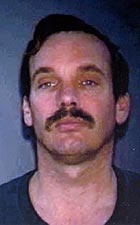
FBI photo |
Glen Margolis is being sought in
the abductions of his children.
|
|
The tearful reunion occurred Sunday night after
the children, now 18, 16 and 14, were flown from Costa Rica to Los Angeles
and driven to San Diego to meet their mother, Abbe Cavender Crone.
Cavender Crone and her children said yesterday they harbor no hard feelings
toward the father, Glen Margolis.
"My children all knew how to contact me," Cavender Crone said. "I felt like
the kids must have had some choice. They were with their dad, who loves them
very much. I took some comfort in that."
But the separation took its toll. Suffering from bouts of depression, the
once-stable mother of three said she found it impossible to work. She lost
her job as a receptionist and found herself living in her car or with
friends.
She considered traveling to Costa Rica to look for her children, but felt
that might force them further into hiding.
Sunday's reunion was moving.
The odyssey began Nov. 21, 1997, when Margolis picked up his three children
at their schools for a weekend visit. Under a court agreement in place since
1992, Cavender Crone's former husband picked up the children from school on
Friday afternoons, cared for them during the weekend, then returned them to
school Monday morning.
On that Monday, the children never returned.
Margolis had obtained passports and chartered a helicopter for $35,000 to
take them to Costa Rica, said Daniel Dzwilewski, special agent in charge of
the FBI's San Diego office.
The helicopter got them as far as Guatemala. From there, the family made it
to Costa Rica, said Sarah Margolis, the oldest of the three children.
The children didn't try to contact their mother because they wanted to live
with their father, she said.
"I knew I wouldn't be any happier here" in San Diego, she said. "My dad
always said that if we didn't want to be there, he would make it right."
Glen Margolis, an attorney who does not practice law, has not been found.
U.S. authorities say he will be charged with three counts of child abduction
and two counts of child molestation. The molestation cases are not linked to
his children.
Authorities believe Margolis is somewhere in Costa Rica.
The reunion occurred because Sarah turned up at the U.S. Embassy in San
Jose, Costa Rica, on Thursday and asked about returning to the United
States. The next day, she returned with her two younger brothers and their
luggage and asked to be reunited with their mother in San Diego, Dzwilewski
said.
Sarah Margolis said her father encouraged his children to return because he
was running out of money.
Sarah Margolis, who said she has done some modeling in Costa Rica, and her
brothers are eager to start a new life. All three will soon enroll in
school, which they haven't attended since they left.
"I want to study, I want to keep modeling and I want to travel," she said.
"I'm very ambitious."
New GSM
Service Approved
The Contraloría General de la
República - Comptroller's Office - has given the green light to ICE to
complete it's deal with the Ericcson company to install the new GSM service
in Costa Rica.
The new service will enable some 600.000 additional cellular telephone lines
in the country and will be avialable no later than March of 2005.
The new service will bring the total number of cellular lines to 1.5
million. In use at this time are 500.000 lines of the TDMA technology and
400.000 GSM lines installed recently by the French firm Alcatel.
The deal had been stalled when the companies Alcatel (France) and Motorla
(US) appealed the Ericcson to the Contraloría, claiming irregularities. The
Contraloría has rejected the appeal and the Ericcson deal can now be
completed.
Last month, ICE put on the market some 15.000 GSM lines that were used up
within days. Currently there about 100.000 TDMA lines available.
The new GSM network to be installed by Ericcson will have new features
including the sending and receiving for fotos, music and internet service.
Existing users of the current GSM or TDMA lines can switch to the new GSM
service without having to change their phone numbers.
The current cellular telephone rates are ¢2.900 colones (US$6.75) for basic
service which includes 60 minutes of call time and ¢30 colones (US$0.06) or
each additional minute during the day and ¢23 colones ((US$0.05)for evening
calls. ICE does not charge for incoming calls.
The president of ICE, Pablo Cob, confirmed last night that the deal is
moving ahead, but it would not be until the first quarter of next year
before the new service would be avialable to the market. Ricardo Raylor,
president of Ericcson Costa Rica, assures that they will have the network
installed in the shortest time possible.
The new GSM service will operate on the same frequency 1800MHz as the
current system and shoudl have the same coverage as the TDMA. The current
GSM service has had coverage problems, forcing the Autoridad Reguladora de
los Servicios Públicos (ARESP) - the regulator of public prices and services
- last month to reduce the basic rate for cellular service by ¢100 colones.
We Don't Need Your Vote,
Nicaragua Told
In a political move, Costa Rica yesterday asked Nicaragua to ignore it's
request for Nicaragua's support of former Costa Rican president Miguel Ángel
Rodríguez for the position of secretary of the OEA.
Roberto Tovar, Costa Rican Chancellor, yesterday delivered the message to
Nicarguan Embassador, Franciso Fiallos, saying that Costa Rica will not
accept Nicaragua's demands for it's vote to support Rodriguez.
Costa Rica will not count on Nicaragua's vote, which is one of two votes the
ex-president needs to have for the position. The other vote is from El
Salvador, which has not made it's decision.
Nicaragua last week had said it would support Rodriguez with it's vote on
the condition that Costa Rica would resolve the long disputed problem of the
River San Juan which borders the two countries and the current problems
exprerienced by Nicaraguan nationals in Costa Rica.
This year, many Nicaraguans were expelled from Costa Rica in several police
raids that netted Nicaraguans staying in Costa Rica illegally, the most
recent the event at La carpio, west of San José, and the decision at the
beginning of the year where Costa Rica requires Nicaraguans to have a
passport ot enter Costa Rican territory.
|
Castro celebrates revolution victory, attacks US
Cuban President Fidel Castro lashed out at the United States on
Monday when his country celebrated the 43rd anniversary of its revolution
victory, the local press reported Tuesday.
Appearing in a television show on Monday, Castro said the Cuban Revolution will
survive his death "because there is no power in the world that can defeat it."
He said the Cuban people, with intrepidity, patriotism and consciousness, have
shown unrivaled support for the country and have resisted for 43 years the power
of an empire like the United States.
April 19, 1961 is a date that should never be forgotten because a "little ant"
like Cuba faced up to an "elephant" represented by the power of the North, the
president said.
On that day, Cuba defeated a mercenary invasion of Playa Giron, which it accused
the United States of masterminding.
He warned that Cuba now boasts more and better weapons and more experience and
tactics against any imperialist aggression.
Citing Iraq as an example, Castro denounced the United States for attacking the
Arab country in an attempt to seek petroleum and dominate the country.
Castro also charged that the United States is holding detainees in the
Guantanamo naval base in Cuba without any legal process.
After being criticized by a narrowly approved resolution for its human rights
record last week, Cuba submitted a draft resolution to the Geneva-based UN Human
Rights Commission, accusing the United States of holding more than 600 prisoners
in Guantanamo without any legal process.
Six
people sentenced in Panama for attempting to
murder Castro
Six people who attempted to murder Cuban leader Fidel Castro were
sentenced in Panama on Tuesday after a trial of over one month.
According to the Panamanian judicial department, the six people -- five Cuban
Africans and one Panamanian -- were sentenced to between four and eight years in
prison.
Luis Posada and the other men were arrested shortly after Castro unveiled a plot
to kill him during an Ibero-American summi there in November 2000. The Cuban
authorities then demanded the extradition of the five people of Cuban origins,
but the demand was turned down by the Panamanian side.
In accordance with the announcement of the court, Posada and Gaspar Jimenez were
sentenced to eight years' imprisonment for endangering public safety and
falsifying documents. Guillermo Novo, Pedro Remon and Cesar Matamoros were given
seven-year prison terms for endangering public safety. And Jose Hurtado of
Panama got a term of four years in prison as an accomplice.
Cuban officials said Posada, 76, has been plotting anti-Cuba terrorist
activities since the 1960s, including the bombing of a Cuban civilian plane
flying over Venezuela in October 1967, killing all the 73 people on board.
Mexico backs Cuban motion on human rights inquiry into Guantanamo
Mexico pledged Tuesday to support Cuba's draft resolution calling for
an inquiry into Guantanamo if it is put to the vote at the UN Human Rights
Commission.
Patricia Olamendi, undersecretary for global issues and human rights at the
Mexican Foreign Ministry, said, "Our vote will be in the sense that we are
demanding respect for human rights in the fight against terror."
"We support and will support the position that any person detained is subjected
to a fair trial," the official said in a teleconference from Geneva,
headquarters of the UN Human Rights Commission.
Cuba submitted a draft resolution last week against the United States for its
holding of more than 600 detainees in the Guantanamo naval base in Cuba without
any legal process.
The resolution calls for a UN investigation into the Guantanamo case and is due
to be voted on in the commission on Thursday.
Cuba's draft resolution came as a counterattack to a US-backed resolution
condemning lack of human rights in Cuba.
On April 15, the 53-member UN body passed a Honduran-sponsored resolution
criticizing Cuba for its human rights violation. The resolution was narrowly
approved by 22-21 votes, with 10 abstentions.
|


