American Agrees to be sent to Costa Rica to
Face Sex Charges
A retired American dentist accused of
drugging girls for sex at a beach house in Costa Rica has agreed to be sent
to Costa Rica for prosecution, a U.S. prosecutor said Monday.
|
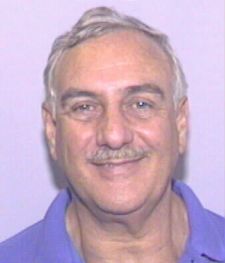
Dr. Arthur Carl Kanev |
|
|
INCREASE IN PRICES THIS PAST
MONTH
- Milk: ¢12 more per liter, to
¢227
- Ice cream & cheese products:
6%
- Rice: ¢26 per kilo
- Water: 36%
- Taxis: ¢25 first Km to ¢265
and ¢150 for additional km,
WAITING PUBLICATION IN THE
OFFICIAL NEWSPAPER
La
Gaceta:
- Electrical Power: 6.8%
UNDER CONSIDERATION:
- Gasoline: ¢7 per liter
- CNFL (power & light): 21.8%
- More than 800 bus routes: 13% |
|
|
|
|
Dr. Arthur Carl Kanev, 57, was arrested last
July as he returned to his mother's condominium in Pompano Beach after a
month long stakeout by Broward County sheriff's deputies.
Assistant U.S. Attorney Donald Chase said Kanev would formally drop his
challenge to extradition at a hearing Today.
Defense attorney William Aaron did not return phone calls seeking comment.
Costa Rican authorities arrested Kanev after hundreds of pictures of child
pornography were found at his beach house in 1999. Authorities said Kanev
and a cohort drugged and raped local girls, some as young as 13, and took
pornographic pictures of them.
Kanev, formerly from Waltham, Mass., fled Costa Rica months later while free
on bail. He denied any wrongdoing in an interview in 2000 on ABC's "20/20"
about the Costa Rican sex trade, and he was profiled on "America's Most
Wanted" in 2001.
In extradition papers, Costa Rica named eight victims and offered statements
from several teenagers who said five men were staying at the house.
Authorities said poor girls were offered marijuana, liquor, food and the use
of a swimming pool and nearby beach.
Girls said they also were sedated and woke up realizing someone had had sex
with them. Police found sedatives and pictures of sleeping, partially nude
girls when they searched the house.
Some of the girls said they consented to sex. A 16-year-old said she was
paid every time she brought a new friend to the house. She received money
for visits with no sex but more for sex. A girl said she had sex with
"Arturo" on her second visit and he used condoms.
Another girl said she visited the house three times a week and pictures were
taken on some visits. A 19-year-old said she once woke up topless and
feeling drugged.
Kanev was charged with rape, unauthorized use of drugs and corruption of
minors.
Joe Curtis Baker, an Oklahoma City veterinarian charged along with Kanev,
was sentenced in Costa Rica to 24 years in prison.
Stanley Osborne, Adviser on the Study of the
Supersonic Jet, Dies at 99
Stanley de Jongh Osborne, was
born in San José, Costa Rica, and graduated from Phillips Academy Andover in
Massachusetts in 1922 and from Harvard in 1926, died on Friday at his home
on the Upper East Side of Manhattan. He was 99.
Osborne did postgraduate business studies at Harvard in 1927 and was a
special assistant the next year to the president of the United States
Olympic Committee, Gen. Douglas MacArthur.
Mr. Osborne was a New York investment banker, a presidential adviser on
aviation and honorary chairman of New York Presbyterian Hospital, joining
the investment firm Lazard Frères & Company, 1964 after a career with
Eastern Air Lines under Capt. Eddie Rickenbacker and the Olin Mathieson
Chemical Corporation.
In 1944 he joined Eastern Air Lines as vice president for traffic and sales.
In 1950 he went to the Mathieson Chemical Corporation as treasurer. After
the company's merger with Olin Industries, he became president and chairman
of Olin Mathieson in 1957.
In 1963, Mr. Osborne's expertise as an airline executive prompted President
John F. Kennedy to ask him and Eugene R. Black, a former president of the
World Bank, to weigh the feasibility of an American competitor to the
Concorde, the projected British-French supersonic jetliner. Mr. Osborne
remained an adviser to President Lyndon B. Johnson until 1967 on the
commercial supersonic transport, which was never built. He was also a
special consultant to the administrator of NASA until 1968.
Elizabeth Osborne died in 1984 after 55 years of marriage to Mr. Osborne.
Mr. Osborne is survived by two daughters, Mary O. Witherbee, of Princeton,
N.J., and Cynthia O. Hoskins, of California, Ky.; a son, Richard de J., of
Manhattan; 11 grandchildren; and 24 great-grandchildren.
|
 |
|
Increase in Suicides Worries Authorities
The increase in suicides during Semana
Santa has Costa Rican authorities worried. Organismo de Investigación Judicial (OIJ)
records show that nine people decided to end their lives, five of which were
under the age of 24, one as young as 15.
PANI, the child welfare protection agency, reports one suicide attempt by an
adolescent in San José.
Authorities report that
of the 9 suicides during the Holy Week, 8 were men, while one a
young woman of 19 years of age.
According to statistics, in Costa Rica, men are more likely to take
their own lives over women. In the year 2000, 263 suicides were
recorded, of which 2232 were men and only 31 women. |
 |
In 2001, there were 232 suicides - 205 men and
27 women, while last year the number of suicides increased to 315, of which 252
men and only 63 women decided to take thier own lives.
Experts say that the most common signs that lead to suicide are loneliness,
feeling of sadness and low self esteem. Experts reccomend not to ignore those
signs and get professional help before too late.. Most suicide victims have
attempted suicide in the past.
Ten
Years of Internet
In April of 1994, RACSA (Radiográfica Costarricense S.A.), a state owned
company, began marketing internet to the masses with a connection oos 2.4Kbps
(kilobits per second) which then cost $100 for 30 hours of connection time.
Today, ten years later, RACSA charges $15 per month with unlimited time on a
connection of 56Kbps. Also, today RACSA, by way of Cable Modem, offers service
connection of up to 1.024kbps.
RACSA has been providing international telegraph services in Costa Rica since
1921, beginning as a private company known as Radiográfica Internacional.
In 1964, a law was passed that saw 50% of the original RACSA pass to the hands
of ICE and then in totality in 1972.
With the fall of the use of the telegraph, in 1980 RACSA began offering telex
services.
The pioneers of RACSA are Guy de Téramond, Juan Carlos Blanco, Álvaro Retana
Cruz and Mario Serrano. De Téramond was ex- minister of Science and Technology
who lent the company his equipment to start the business.
The internet in Costa Rica is accredited to a group from the University of Costa
Rica and other state institutions who created an national network in 1990.
Today, ICE, who owns RACSA, offers internet service to the general market with a
connection speed of 4.096Kbps. This year it plans to expand that service with
the introduction of DSL, which it hopes to connect 84.000 subscribers.
It's Hot
Baby!
Been feeling hot lately? Don't worry,
it' going to get cooler, the weatherman tells us.
After reaching the highest temperatures recorded for this year, the weatherman (Instituto
Meteorológico Nacional - IMN) assures that the mercury will drop to seasonal
normals.
Last Saturday the Guanacaste region recorded highs of 38F in the shade, while in
San José the record was 30C to 34F and very little in the way of a breeze.
The high temperatures and humidity are due to Pacifc current that blanketed the
Guanacaste and Central Valley regions.
The weatherman tells us that the rainy or "green" season is on it's way,
beginning the first week of May and that will also bring cooler or seasonal
temperatures.
|
 |
|
|
|
|
|


