Police Find Katia
Murdered
Following almost a week of searching and asking the
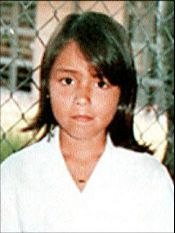
public for help, police yesterday foun the body of
Katia Vannessa González Juárez, 8 years old, who
had disappeared
last Friday.
The
body was found in a house only 25 meters from
where the little girl lived.
Police detained two men - Edwin Sánchez
Madriga, 3, and Rubén Delgado Barboza, 52 -
both have a criminal past. One of them,
committed a similar crime some 20 years ago in
Los Lagos de Heredia.
On information from neighbors and another
little girl who had been with Katia days
before she disappeared, police believed that
the two men eventually arrested could be
involved in the disappearance. |
|
In an early morning
raid, police where able to enter the home of the two
and found, under a loose floor board, the buried
body of little Katia.
The cause of death is not yet known.
American Convicted
of Sexual Abuse of Girls in Nicaragua
 Wildman
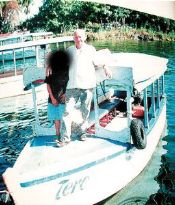
Roy Adrian, a 75 year old American man, was
condemned last week to four years in prison before a
judge in Granada, Nicaragua, who found him guilty
for raping a 13 year old girl. Wildman
Roy Adrian, a 75 year old American man, was
condemned last week to four years in prison before a
judge in Granada, Nicaragua, who found him guilty
for raping a 13 year old girl.
The foreigner will
have to fulfil the sentence because the laws of this
country prohibit the release of convicts due to
their age, in the case of sexual crimes. Probation
is not an option either, because the sentence is for
more than three years.
In March, the police
obtained a warrant to enter the rented house of the
accused man, and liberated the victim. The door was
locked. Inside the house, the officials found 47
photographs of child pornography, and 38 rolls of
film. At the moment of his arrest, Wildman had just
picked up various photographs of the victim from the
developer.
Casa Alianza
Nicaragua, through its Legal Aid program, helped the
prosecutor in charge of the case against the
American to prepare the evidence for the successful
trial.
According to
authorities, the foreigner entered Nicaragua for the
last time in December of 2002. The immigration
records revealed that during the previous three
years he was in Costa Rica at least seven times and
it was common for him to travel between the two
countries.
For this reason, Casa
Alianza has a particular interest in determining if
some of the photographs in the American's possession
were taken in Costa Rica, in order to identify the
possible victims and coordinate the necessary help
to overcome the catastrophic effects of sexual
exploitation.
Wildman is a retired
boat captain. He often rode his red motorcycle
through the streets of Granada and he liked to make
friends with under age children. The neighbors
thought of him as nothing more than a tourist, until
they began to observe him frequently bringing boys
and girls to his house.
Casa Alianza, a
non-governmental organization that defends the
rights of children in Mexico and Central America, is
disturbed by the increasing number of foreigners who
come to the region with the intention of buying, and
then abusing, boys and girls.
'I-told-you-so'
troops off to Iraq
It has been
just a few days since the first of the Hondurans
arrived, an advance party of four military officers
to be followed by some 370 troops. Soon, others will
come from El Salvador, from Nicaragua, from the
Dominican Republic - the first Latin American forces
in Iraq.
By any measure, it
will be a small contingent, a maximum of 1,200
troops. It's a drop in the bucket compared with the
64,000 on active duty in those four countries, not
to mention the 146,000 U.S. troops in Iraq now.
What could such
mini-militaries possibly offer Washington in Iraq?
And why would they bother to go when their
contribution would be so slight?
For Washington, they
serve the "I told you so factor" so
critical to U.S. foreign policy. By obtaining this
troop commitment from its Coalition of the Willing,
the loose conglomeration of nations that supported
the invasion in March, the Bush administration can
show that indeed the ongoing operations in Iraq have
broad international support and, it hopes, deflect
some of the anti-Americanism spreading in Iraq.
Washington
demonstrated last week that being a member of the
Coalition of the Willing is not sufficient in and of
itself to ensure its auspices. And for those who
stray from the pack for any reason, there can be
substantial consequences.
Take Costa Rica
and Colombia. These two members of the coalition
were cut from U.S. military aid last week when both
refused to sign an agreement that would grant U.S.
soldiers and contractors immunity from prosecution
at the U.N. International Criminal Court.
In actual dollars,
both countries won't lose much initially. But the
message was loud and clear to Colombia, Washington's
most critical ally in the war on drugs and terror in
Latin America: put up with all our desires or shut
up. For Costa Rica, by most measures the best
performer in Central America economically, socially
and democratically, the message was just as clear.
This grudge-filled
diplomacy pollutes the political waters for Latin
American nations in the Coalition of the Willing.
Central American officials bent over backward this
week to avoid the appearance of being too
subservient to U.S. wishes, despite their
cooperation with Washington in Iraq. Time and again,
they couched their decision to send troops to Iraq
in United Nations terms.
There seems to be
then an acute case of fear in sounding pro-American
these days.
So while there's no
written rule that says small countries cannot
decline Washington's requests, they'd be foolish to
ignore how others - that could afford it - have been
treated. Those are the awkward calculations many
leaders are having to make to please U.S. foreign
policy's caprices
|


