| NEWS |
|
updated by 7:00 a.m. CST each day
|
Man Accused of
Abusing His Granddaughter
Few thought that at his 73 years of age, Rafael
Murillo Bastos could become jumbled in a case like this, nevertheless,
he is being accused with two counts of sexual abuses
against his 7 year old granddaughter and a 5
year old neighbour.
Murillo Bastos was transferred to the Sarapiquí,
office of the public prosecutor Sarapiquí, as soon
he was arrested by the Fuerza Publica.
An aunt visiting the house stumbled upon the
fact that the little girl was being abused. The
little girl was immediately brought to the
nearby clinic for a medical examination.
This all occurred in the area of Cariblanco in
the province of Limon, in the Caribbean coast.
The mother did not want to accuse the man.
Police are looking at the possibility of
charging the mother with neglect of her parental
durties.
According to the Patronato Nacional de la
Infancia (PANI) - the child welfare agency - the
case will brought to Alajuela.
The defendant refused to make a declaration and
due to his age - over 70 - the courts
cannot place in preventive prison, though he is
asked to sign in every month and to stay away
from the little girl.
More Reports
of Sexual Abuses
Following
the murders of several minors linked to sexual
abuses and exploitations, at least 6 cases of
sexual abuses have been reported in the last
couple of days.
Parents and teachers are keeping a close eye on
the situation. In the schools, teachers are
imparting to the children the importance of
reporting situations of strange behaviour by
friends and family. Families are being
encouraged by the authorities, to report any
cases sexual abuse.
According
to the prosecutor's office, there were 21
accusations made in May of this year, 17
in June and 24 more in July. As of June,
there are 1.738 men in prison related to
sexual crimes.
According to Liliam Gómez, prosecutor for
Sexual Crimes, there exists no profile for
a sexual abuser. They can come from
anywhere, from the unemployed to medical
professionals and teachers alike.
|
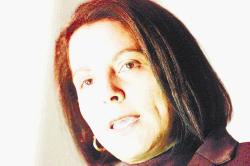
Liliam Gómez,
prosecutor for Sexual Crimes
|
Two Out of
Five Latin Americans Live in Poverty
Some 220 million
Latin Americans that is two out of five, in 2002 lived in poverty of which 95 million live miserably, according to the latest report from the United Nations Economic Commission for
Latin America and the Caribbean, Cepal.
The report released in Cepal office in Santiago reveals that 43,4% of the region’s population lives below the poverty line, an almost one percentage increase over 2001, while 18,8% of the poor live in indigence compared to 18,2% the previous year.
The Social Review of Latin America 2002-2003 reveals that poverty indexes have remained constant for the last five years, since 1997.
“The only exception was 2000 when the good economic performance of the region helped reduce poverty by 4 million people”, said Cepal Director Jose Antonio Ocampo who anticipated that in 2003 poverty will reach 43,9% of which 19,4% indigent.
Although most countries of the region did not experience major changes, Argentina and Uruguay suffered considerably the drop into poverty.
According to Cepal in urban Argentina poverty rocketed from 19,4 to 45,4%, while those living miserably trebled from 6,7 to 20,9%.
Uruguay also underwent an impoverishment process with the index in urban areas growing from 9,4 to 15,4%, although indigence remained rather stable at 2,5% of the whole population.
In the other extreme Mexico and Ecuador experienced a “perceptible” decrease in poverty percentages in urban areas comparing 2000 with 2002. In Mexico the reduction was 1,7% and in Ecuador 8% considered significant since in 1999, 64% of Ecuadorians lived in poverty.
Bolivia, Brazil, Colombia, Costa Rica, Panama and Venezuela remained
flat or experienced a slight increase below one percent.
Only Chile and Dominican Republic managed acceptable reductions in the percentage of people living in poverty, and seem in line to the goal of cutting poverty in 2015 by half as was agreed in the “Millennium Summit”.
Regarding under nourishment, this is extensive to 11% of the regional population, 55 million, according to the UN Food Program. This is particularly serious with 9% of children and with 19,4% who suffer what is described as chronic under nourishment.
However in spite of the impressive numbers, the under nourished population in the last decade dropped in 20 of the 24 countries of the region, indicated Mr. Ocampo.
|
|

Click
here a FREE quote on the lowest Air Tickets Prices
to and from Costa Rica!
|
|
Chilean court rules out stripping Pinochet of immunity
The Chilean Supreme Court on Wednesday rejected, by a vote of 15 to 8, the removal of the immunity enjoyed by ex-General Augusto Pinochet, authorities said.
The authorities also declared that a new medical examination for the former general was denied although the plaintiff, who tried to have Pinochet face charges of killing several members of the Central Committee of the Communist Party of Chile in 1976, expressed doubts that he suffers from senile dementia as diagnosed.
On Wednesday morning, the tribunal listened to the arguments both for and against the removal of Pinochet's immunity. The plaintiff presented new evidence that would prove the ex-ruler of Chile does not have mental problems and he would be able to stand trial.
The plaintiff also said the retired general did not fulfill his duties, such as protection of Chileans and prevention of crimes, as president of Chile and commander in chief of the armed forces during the period of the junta's rule from 1973 to 1988.
The Communist Party of Chile asked Judge Juan Guzman again last week to remove the immunity enjoyed by Pinochet in order to clear up his role in the disappearance of the party's leaders in 1976, as part of the case dubbed
"Conferencia."
The hearings on Wednesday marked the revival, after two years of dormancy, of a drawn-out legal battle to force the 87-year-old Pinochet to stand trial on charges of human rights abuses during his 17-year rule from 1973 to 1990.
About 3,000 people died in the violence resulting from the 1973coup that launched Pinochet to power, but due to his poor health and delaying tactics, no one expects him to ever appear in court.
Pinochet did once lose the immunity he had as a former president when Chile's highest court ordered him to stand trial in2000 for a different human rights case. The trial started but was cut short in 2001 when he was diagnosed as mentally incompetent.
"Black list" of anti-globalization activists denounced before Cancun meeting
The existence of an official "black list" of anti-globalization activists and intellectuals planning to demonstrate during the World Trade Organization (WTO) ministerial meeting of Cancun was denounced by Mexican civil organizations Wednesday.
The goal of this list is to watch over and crack down on activists, said the Mexican Network of Action Against Free Trade (RMALC), which groups organizations of peasants, feminists, environmentalists and human rights activists.
The Mexican press last week released reports indicating that the authorities will have in their sight more than 80 intellectuals and activists, 20 of them Mexicans, during the WTO event of Sep. 10-14.
Erendira Cruz from the National Center of Social Communication (CENCOS) said, "It is true this black list exists."
She confirmed that representatives from several non-governmental organizations (NGOs) met on Tuesday night with Mexican Foreign Minister Luiz Derbez, who said he did not know of such a list.
On that occasion, the minister agreed to facilitate the activities of NGOs, and keep in direct contact with them during the Cancun meeting.
Cruz said the harassment of activists was reflected in their difficulties in finding lodgings, and obligations to obtain an immigration document which took two months, at a cost of 100 US dollars.
New Venezuelan election council sworn in
Members of Venezuela's new election authority, the National Election Council, were sworn in by the Supreme Court Wednesday.
"The Venezuelan people can be calm because we guarantee an impartial, objective, balanced and independent National Elections Council," said Francisco Carrasquero, head of the five-member council.
Venezuela's Supreme Court named the council late Monday after the National Assembly failed to do so.
The new council, which could organize a possible referendum on President Hugo Chavez's presidency, was approved by Chavez on Tuesday.
The council must issue a ruling within 30 days on the validity of the 3.2 million voter signatures, delivered by opposition leaders last week.
The signatures, collected to press the demand for a referendum to oust Chavez, were considered as invalid by the Venezuelan government.
Under the Venezuelan Constitution, a referendum may be held after Aug. 19, the halfway date for Chavez's term in office. But the opposition must collect signatures from 20 percent of the country's electorate to allow for the vote.
The referendum is the third attempt by Chavez's opponents to oust him after a failed coup in 2002 and a general strike earlier this year, which crippled the oil industry of the world's fifth oil exporter.
|
|
|


